How to visit Pompeii

Pompeii is one of the largest and best-preserved archaeological sites in the world, spanning 66 hectares of streets, homes, temples, and bathhouses buried by the eruption of Mount Vesuvius in 79 CE. The scale of the site means that many visitors focus only on the most famous spots and overlook others of equal interest. Most visits last 3–4 hours, while a more complete visit can take up to six. This guide explains how to reach the site, which entrance to use, ticket considerations, and the main areas to prioritize.

Fast facts & essentials

  • Location: Pompeii Archaeological Park, Campania, Italy (25km from Naples)
  • Hours: 9am–7:30pm (April to October) | 9am–5pm (November to March) | Last entry: 90 minutes before closing
  • Getting in: Standard timed entry starts from From €26.80 for and Skip-the-line guided tours from €29.50. Advance booking is strongly recommended from April to October; same-day tickets are occasionally available in winter but unreliable during spring.
  • Entrances: Porta Marina (west, closest to the train station, busiest) and Piazza Anfiteatro (east, generally less crowded).
  • How long to allow: 3–4 hours covers the main highlights. A thorough visit takes 5–6 hours. The Pompeii Plus route, which adds the suburban villas, takes at least 7.
  • When to go: Before 9:30am on weekdays is typically quieter. Visitor numbers peak between 10:30am and 2pm. After 3pm is calmer and cooler, particularly in summer.
  • What most people miss: The Garden of the Fugitives. Allow at least 20 minutes here. The plaster casts of the eruption victims, preserved in the positions in which they died, are among the most powerful sights in Pompeii, yet many visitors pass them quickly on their way out.
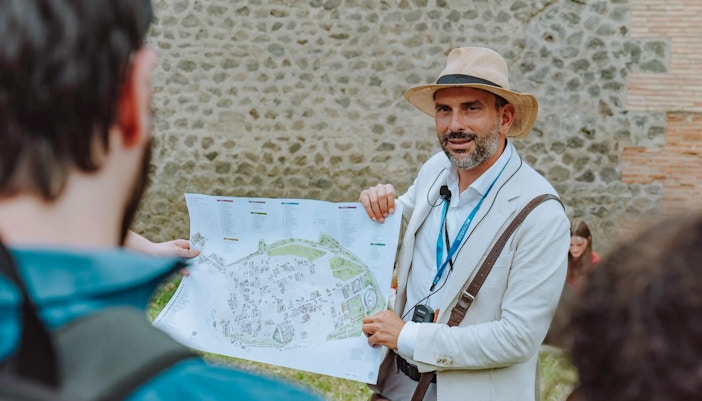
  • Is a guide worth it? Yes, especially for a first visit. Pompeii’s layout is not intuitive, and many important details are easy to miss without context. A guide can cover the main areas efficiently and make the visit easier to understand and remember.
  • Tickets are nominative: The visitor’s name must appear on the ticket. ID checks are occasional but possible.
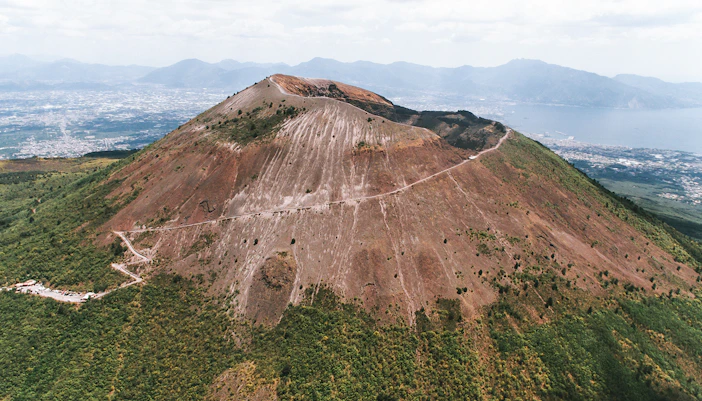
  • Often paired with: Mount Vesuvius crater hike (about 30 minutes by road) and Herculaneum Archaeological Park for a smaller, more intact site.
🎟️ Pompeii admits a maximum of 20,000 visitors per day.

From April to October, morning timed slots often sell out several weeks ahead. Booking in advance is the most dependable way to secure entry for your preferred date.

Jump to what you need

Where & when to go?

Pompeii has multiple entrances and seasonal opening hours, and choosing the right gate and arrival time can make a big difference to your visit.

Pompeii has three entrance points. The one you choose affects wait time and which part of the site you reach first.

  • Porta Marina (main, west entrance): Closest to the Pompei Scavi train station, a 5-minute walk. The most convenient but busiest entrance, with queues of 30–60 minutes in peak season for visitors without a pre-booked ticket. If you have a pre-purchased timed ticket, the wait is much shorter.
  • Piazza Anfiteatro (east entrance): At the far eastern end of the site, near the Amphitheatre. Consistently quieter than Porta Marina, even in peak season. If the Amphitheatre or Garden of the Fugitives is your priority, this entrance saves considerable time and puts you at the site's eastern end before crowds arrive.
  • Porta Marina Inferiore: Adjacent to Porta Marina Superiore and commonly used by guided groups. Sometimes faster than the main gate when Porta Marina is backed up; worth checking at busy arrival times.

💡 If the Amphitheatre or Garden of the Fugitives is on your list, enter via Piazza Anfiteatro. You avoid the main Porta Marina queue, start where most visitors end, and reach the quieter eastern section before crowds concentrate there.

Full Pompeii entrances guide

  • April to October: 9am–7:30pm (last entry 6pm)
  • November to March: 9am–5pm (last entry 3:30pm)
  • Closed: 1 January, 1 May, 25 December

When is it busiest? Tuesday to Saturday from mid-morning to early afternoon is the most congested pattern. The 10:30am–2pm window is when tour buses from Naples, Rome, and the Amalfi Coast converge on the site simultaneously. July and August are the most crowded months overall.

When should you actually go? Weekday mornings before 9:30am are the most reliably quiet. Arriving at opening gives you roughly 90 minutes before tour groups reach the central areas. If morning isn't possible, late afternoon after 3pm is the next best window: cooler, noticeably calmer, and less photographed.

Check the complete Pompeii opening hours

💡 First Sundays of the month offer free entry

A daily cap of 20,000 visitors still applies, and on popular free Sundays this limit is often reached before midday, with late arrivals turned away. Free tickets must still be reserved through the official booking system (at zero cost) or collected at the gate on arrival.

If you plan to visit on a free Sunday, arrive 30–45 minutes before opening. For many visitors, a weekday morning ticket saves more time than the free entry saves in money.

How much time do you need?

Visit type Route DurationWhat you get

Express visit

Porta Marina > Forum > Stabian Baths > Lupanar > Amphitheatre > Exit via Piazza Anfiteatro

2–3 hrs; ~2.5 km walking with minimal backtracking

See Pompeii’s most iconic ruins and get a sense of daily Roman life.

Balanced visit

Porta Marina > Forum > Via dell'Abbondanza > House of the Faun > Amphitheatre > Garden of the Fugitives

4–5 hrs; ~3.5 km walking via a linear route

Explore major highlights plus quieter corners and preserved frescoes.

Full exploration

Full circuit: Forum > Temple of Apollo > Temple of Jupiter > Bathhouses > Bakeries > Residential homes > Amphitheatre > Garden of the Fugitives > Necropolis

6+ hrs; 5.5 - 6 km of total walking

A comprehensive journey through ancient streets and public spaces. Expect 10,000+ steps and significant fatigue by the end.

Pompeii Plus route

Porta Marina > Forum > Via dell'Abbondanza > Amphitheatre > Garden of the Fugitives > Villa of the Mysteries > Villa Regina (Boscoreale) > Antiquarium

5–7 hrs; ~4 km inside Pompeii + shuttle transfers

Extends the visit to suburban Roman villas and museum collections. Requires the Pompeii Plus ticket.

Best ways to explore Pompeii

The Express and Balanced routes work with a standard ticket. Pick up the free map at the entrance and follow the paths. Pompeii covers 66 hectares, and short map distances can feel longer on uneven stone streets. A guided tour offers a clear route and context through the main highlights in about two hours.

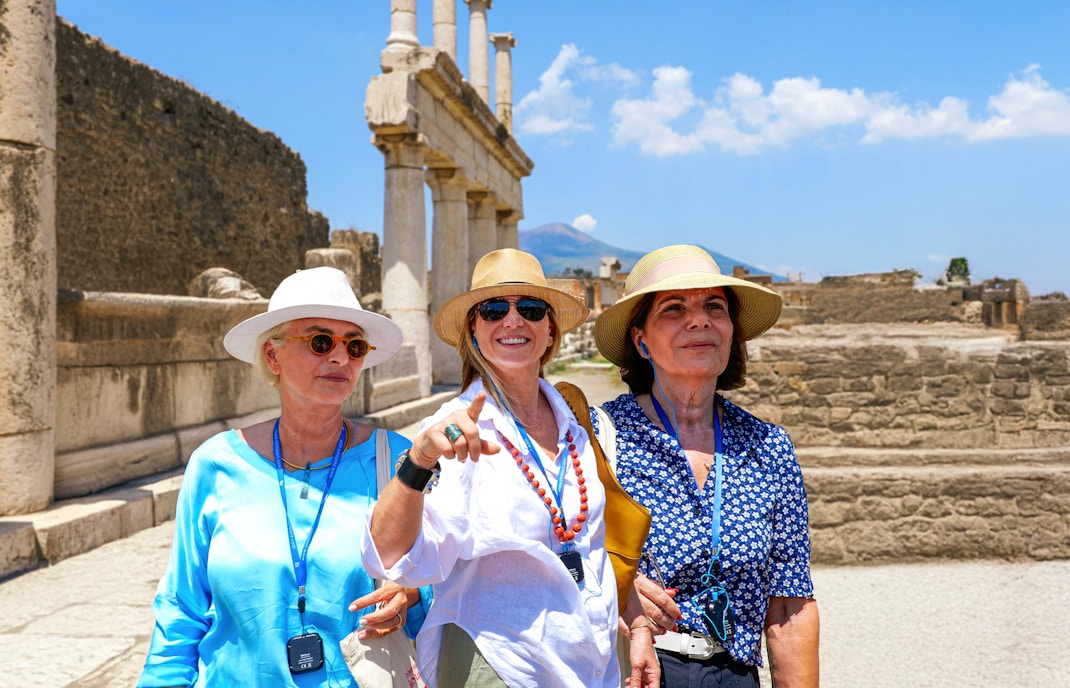
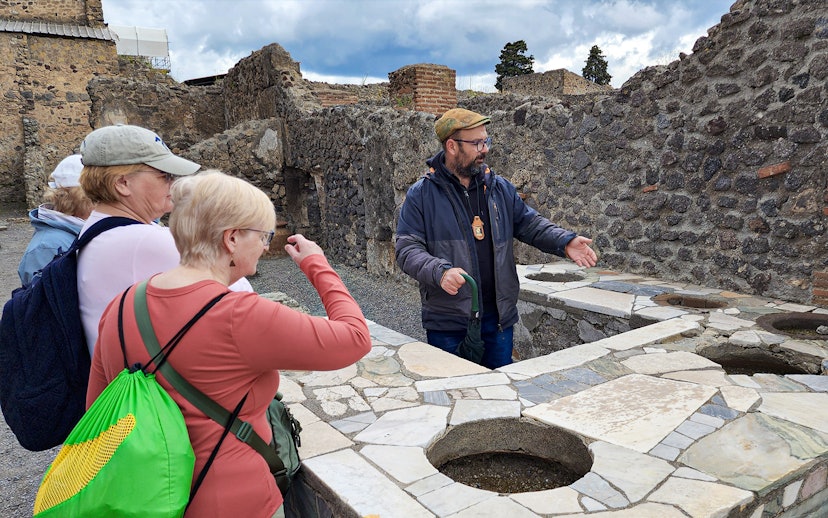
Visitors reading information plaques on a Pompeii VIP small group tour.

Which ticket is right for you?

Ticket typeWhat's includedBest forPrice range

Entry ticket

Timed entry to the main archaeological park. Upgrade to indlude an audio guide.

Maximum flexibility: explore at your own pace, stay as long as you want, no fixed schedule

From €26

Guided tour

Timed entry + licensed guide + headsets

The fastest way to cover the most ground: a 2-hour expert-led route that handles navigation and adds the context that makes the ruins make sense

From €29

Archaeologist-led tour

Timed entry + specialist archaeologist guide + ~2 hours covering the Forum, key domus, and the Basilica. Group sizes are capped.

Explore key areas with specialist commentary on excavations and daily life. Group sizes are capped; book ahead.

From €108

Pompeii Plus Ticket

Main site + Villa of Mysteries + Villa Regina + Antiquarium + free shuttle

Explore key areas with specialist commentary on excavations and daily life. Group sizes are capped; book ahead.

From €32

Pompeii + Herculaneum combo

Timed entry to both sites

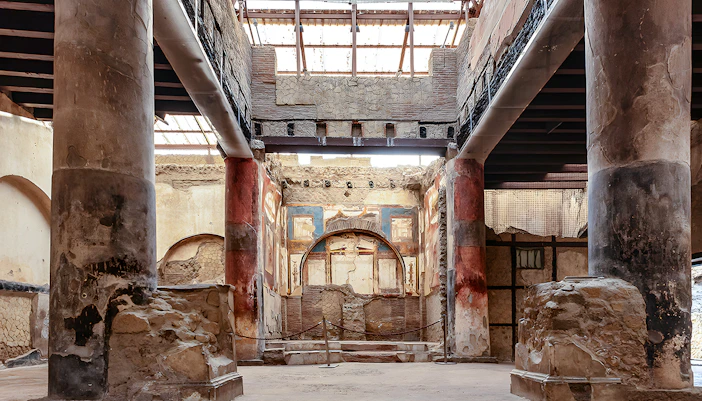
Visiting both Roman sites in one day saves ~6% versus buying separately. Herculaneum preserves wood, furniture, and upper floors, showing a different side of the same eruption than Pompeii.

From €42

Day trip

Entry to both sites

Transport, entry, and guide in one booking; nothing to organise independently. The only practical option for visitors making the trip from Rome in a single day

From €79

Round-trip transfers + Pompeii entry + guide. Options include Pompeii + Vesuvius and Pompeii + Amalfi combinations.

Special experiences at Pompeii
  • Night tours: On select summer dates, Pompeii stays open into the evening, offering a markedly different atmosphere from daytime entry.
  • New Discoveries Tour : Pompeii is still an active excavation site, with significant new finds emerging every year. A dedicated small-group tour covers the most important recent excavations and what the ongoing dig is still revealing about the city.
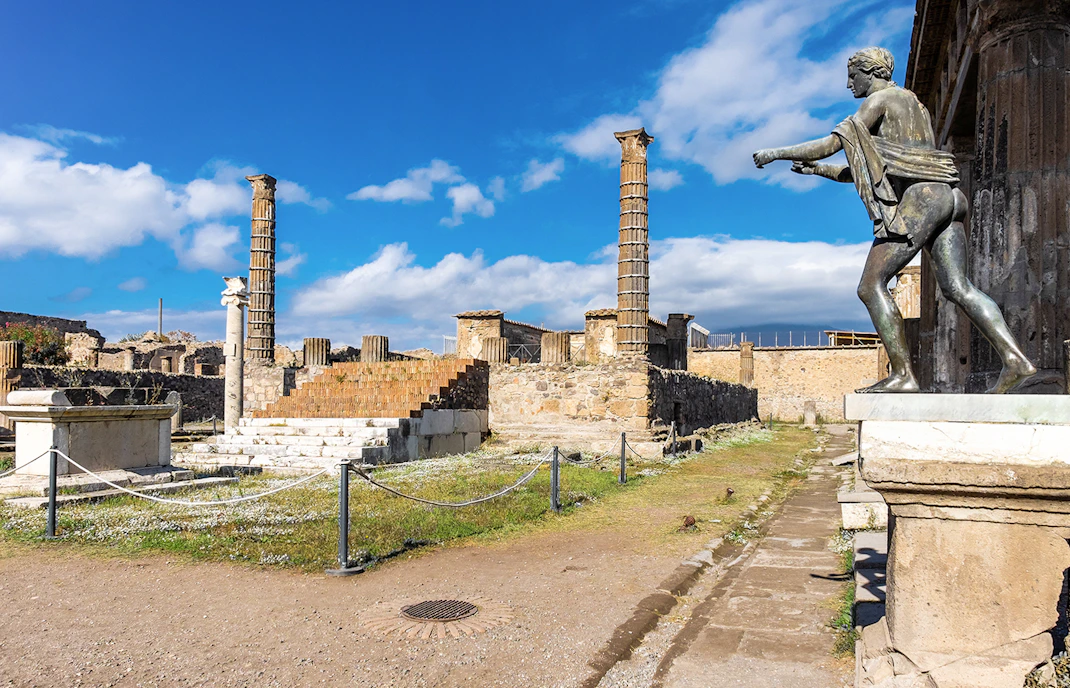
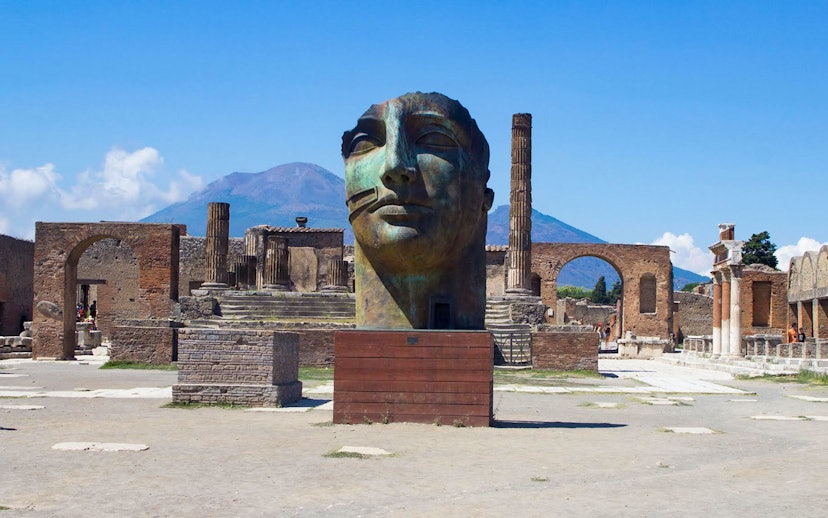
Ancient ruins and bronze statues at Pompeii archaeological site, Italy.

Guided or self-guided tour? How to decide

Guided tourSelf-guided (ticket + audio guide)

Best for

First-time visits, anyone who wants to understand what they're looking at

Return visitors or those who prefer moving at their own pace

Time

Main highlights covered in ~2 hours with an efficient route

Plan 3–5 hours; route-finding and backtracking are common

Coverage

Route includes key areas such as the House of the Vettii, the Garden of the Fugitives, and the central stretch of Via dell'Abbondanza

You rely on the map and signage, which can be difficult to follow across the site

Cost

From €29.50 for a small group guided tour (includes entry and skip-the-line access)

~€26.80 entry + ~€9 audio guide ≈ €36

Crowds

Timed entry is included, which reduces waiting

Timed entry reduces waiting, but audio guide pickup involves a queue and ID deposit

Verdict

Strongly recommended for a first visit

Works well for a return visit or if you have done prior research

Is a guided tour of Pompeii worth it?

Visitors often find that a guided tour makes Pompeii easier to understand. Without context, many structures can feel indistinguishable. A tour with an expert, on the other hand, helps turn a large, complex site into a clear sequence.

✨ Our most popular experience: Pompeii Skip-the-Line Guided Tour, covers the main areas in a small group over about two hours.

How to get around Pompeii

Pompeii follows its original Roman street grid. The main entrance at Porta Marina is on the western edge. The Pompeii Amphitheater and the Garden of the Fugitives lie at the eastern end, about 1.2 km away on foot. Via dell'Abbondanza runs east–west across the site and works as the clearest orientation line.

Pompeii highlights: what to prioritise
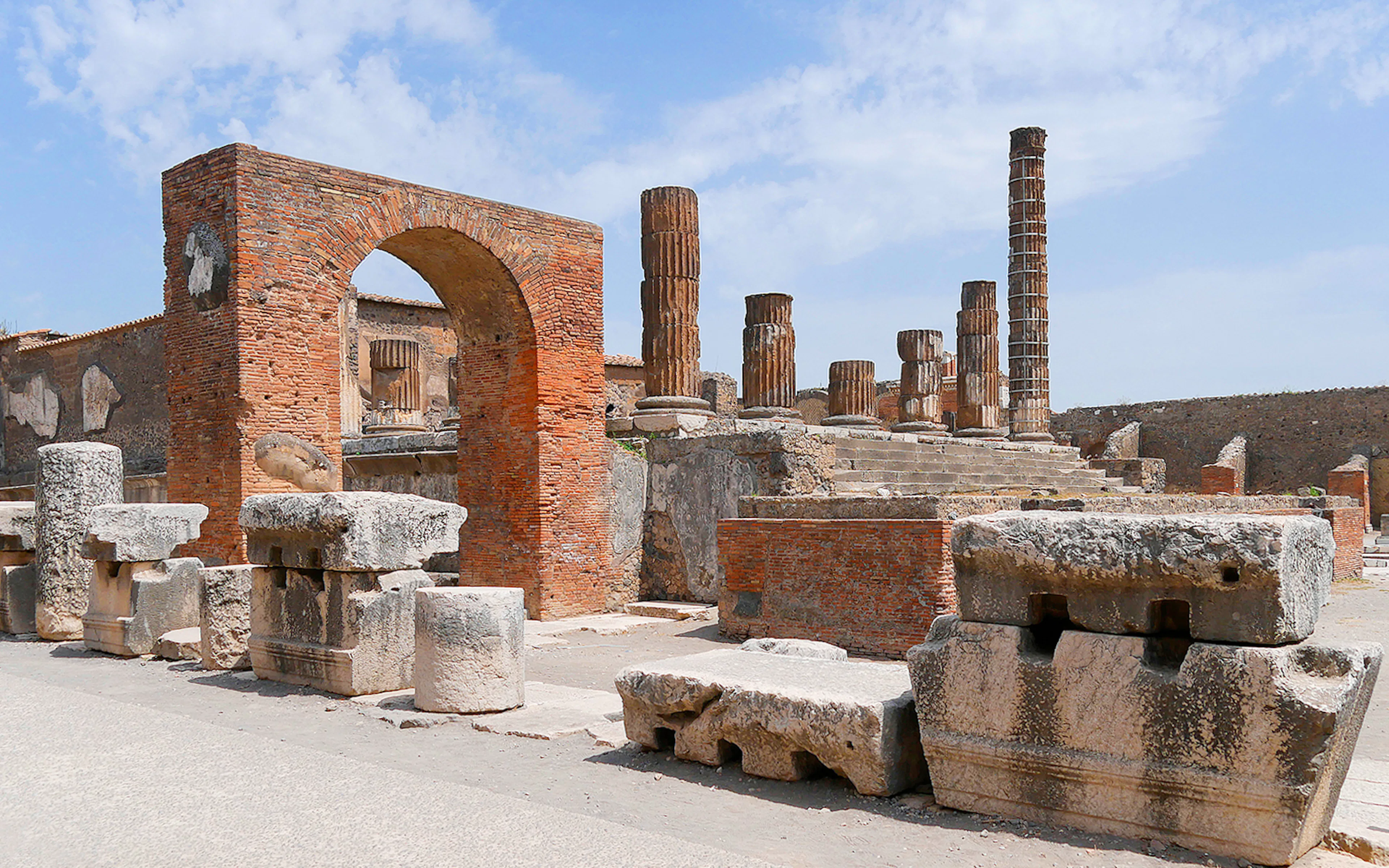
Ancient ruins and columns at Pompeii Forum, Italy.
1/9

The Forum 

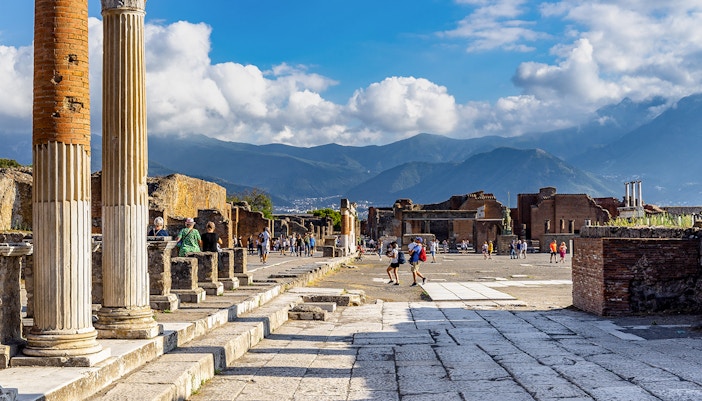
The political and social center of the city, bordered by temples, markets, and civic buildings. From the southern edge, there is a clear view toward Vesuvius.

The Forum gives the clearest sense of how a Roman city was organized, with the Basilica and Temple of Apollo flanking the central open space. The Granary on the north side stores some of the best-known plaster casts.

Where: Directly from Porta Marina, 3–4 minutes on foot

Allow: 30–45 min

Know more

House of the Vettii 

The showpiece of Pompeii's private homes. Recently reopened after a full restoration, it is richly decorated with some of the most vibrant frescoes in the city: the famous Priapus fresco at the entrance, Cupid friezes, mythological scenes, and a beautifully preserved peristyle courtyard. Entry is capped at approximately 15 people at a time, and queues build fast from around 9:15am. Go here within the first 30 minutes after opening; it is the one highlight where timing determines whether you get in at all.

Where: Northwest of the Forum, off Via della Fortuna

Allow: 20–30 minutes

Houses of Pompeii

House of the Faun 

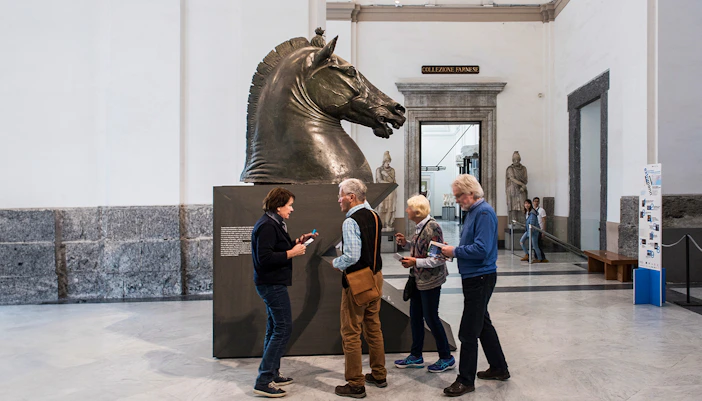
One of the largest private homes in Pompeii, occupying an entire city block. The intricate floor mosaics and two open courtyards give a tangible sense of how wealthy Romans actually lived. The bronze dancing faun statue at the entrance (a replica; the original is in Naples) has given the house its name since excavation.

Where to find it: Via della Fortuna, central-north of the site

Allow: 20 minutes

Stabian Baths 

The oldest and best-preserved bath complex in Pompeii. The division between the men's and women's sections is still clearly visible, as are the heating channels under the floors and the changing rooms with intact stucco ceilings.

Where to find it: Corner of Via Stabiana and Via dell'Abbondanza

Allow: 20 minutes

Baths of Pompeii

Garden of the Fugitives 

Thirteen plaster casts of eruption victims remain in the positions where they were found. This area is often reached late in a visit, when many people are already tired. There is shade and seating nearby. Allow enough time here rather than treating it as a brief final stop.

Where to find it: South-east area of the site, near the amphitheater

Allow: At least 20 minutes.

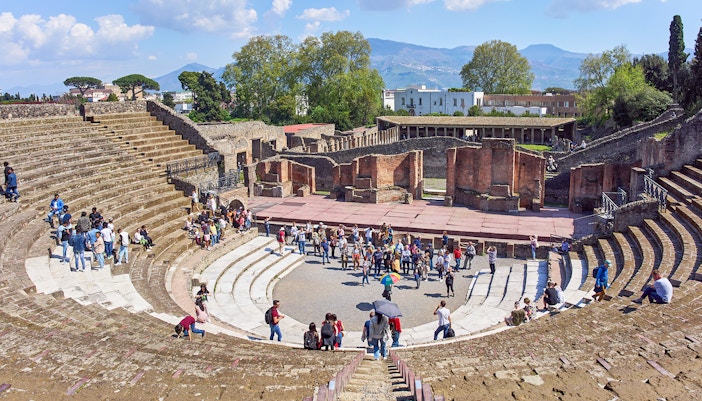
Amphitheatre

Built in 70 BCE, this is among the earliest surviving Roman amphitheatres. Its stone seating tiers and entrance passages are still intact, and it once accommodated up to 20,000 spectators. It is quieter than the Forum due to its distance from the main entrance.

Where to find it: Eastern end of the site, near Piazza Anfiteatro

Allow: 20–30 minutes

Via dell'Abbondanza 

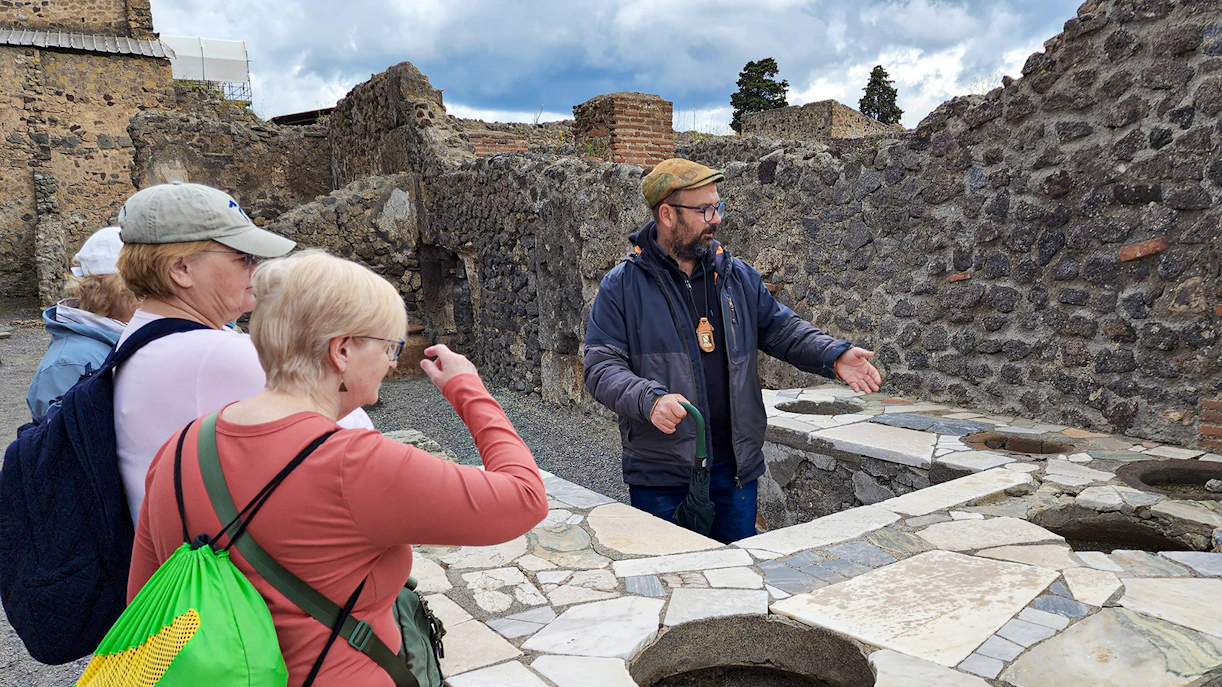
Pompeii’s main commercial street runs east–west across the site. Along it are food counters with stone vessels, stepping stones used to cross the road, and cart ruts worn into the paving. Walking this stretch offers a practical view of everyday activity beyond the major monuments.

Where to find it: Runs east from the Forum to the Amphitheatre

Allow: 15–20 minutes at a walking pace; longer if you stop to examine individual shops and counters

Lupanar

Pompeii's best-preserved brothel, with small stone rooms and wall paintings. A guide can help explain how it functioned within the city’s social life.

Note: The space is small and queues of around 15 minutes are common at peak times. Visit early or late; if the line is long, the wait may exceed the time inside.

Where to find it: Central site, off Via dell'Abbondanza.

Allow: 5–10 minutes inside.

Brothels of Pompeii

Villa of the Mysteries 

Pompeii Plus ticket required.

Located northwest of the city walls, this suburban villa is known for a well-preserved fresco cycle often interpreted as a ritual scene. Access is by shuttle from the Porta Marina side and is included only with the Plus ticket.

Where to find it: Take the shuttle from inside the Porta Marina area.

Allow: 30–45 minutes.

💡 Don't leave without seeing

The Garden of the Fugitives is at the far eastern end, and most visitors are low on energy by the time they reach it. Plan to be here with time and attention to spare, not as an afterthought on the way out.

Facilities & Accessibility at Pompeii
  • 🎧 Audio guides: Available at Porta Marina, Piazza Esedra, and Piazza Anfiteatro in multiple languages. Present ID to rent. Approximately €9 for one device, €14 for two. → Book in advance
  • 🎒 Cloakrooms: Free at all main entrances. Bags larger than 30 x 30 x 15cm are not permitted inside and must be deposited here.
  • 🚻 Restrooms: Near all main entrances, the Antiquarium, Quadriportico, and along key routes. Note locations before leaving the entrance area; they are not uniformly distributed throughout the site.
  • 🍽️ Cafeteria: Chora Café (self-service, near Vicolo degli Augustali) for light meals, snacks, and drinks. Chora Restaurant (Casina dell'Aquila) for a full-service sit-down option midway through the site. → Restaurants near Pompeii
  • 💧 Water fountains: Free refill points distributed across the site. Essential in summer; bring a reusable bottle.
  • 🛍️ Gift shops: Main store near the Forum exit. Smaller kiosks along main paths.
  • 🗺️ Free paper maps: Available at all entrances. Recommended given unreliable phone signal throughout the site.
  • 👶 Baby changing: Near Via dell'Abbondanza, Via di Nola, and Via Stabiana.
  • 🩹 First aid: Medical station near Chora Café.
  • 🅿️ Parking: Private lots within 300–500m of both main entrances. See the Getting to Pompeii section above for detail on location and cost.

Rules and restrictions

Before you enter

  • Tickets are nominative. The name on the ticket may be checked against your ID at the gate.
  • Entry is by timed ticket and includes security screening.
  • Bags larger than 30 × 30 × 15 cm must be left in the free cloakroom at the entrance.

What to wear and bring

  • Wear closed, sturdy shoes with good grip. The site has uneven stone paving and loose gravel.
  • Bring water, a hat, and sunscreen. Shade is limited, especially in warmer months.
  • Free drinking water fountains are available across the site.

Not allowed inside

  • Full meals and picnics (water and small snacks are fine; cafés are available).
  • Smoking anywhere in the archaeological park.
  • Pets, except certified assistance dogs with documentation.
  • Touching frescoes, climbing on structures, or marking walls.

Code of conduct

  • Visitors must remain on marked paths and avoid entering restricted or excavation areas.
  • Climbing on ancient structures, touching frescoes, or damaging ruins and artifacts is strictly forbidden.

Photography and equipment

  • Personal, non-commercial photography is permitted. Avoid flash near frescoes.
  • Drones, tripods, selfie sticks, and professional filming equipment require prior authorization.

Accessibility and strollers

  • The terrain is uneven and can be difficult for strollers and wheelchairs. Some accessible paths exist, but much of the site is challenging to navigate.

Closing time

  • Visitors may be directed toward the exits up to 30 minutes before closing time.

Re-entry

  • Once you leave, you cannot return on the same ticket. Plan restroom stops, meals, and breaks before exiting.

Practical tips

Booking and travel

  • Book 2–4 weeks ahead from April to October. Morning weekend and holiday slots fill first.
  • If arriving by Circumvesuviana, keep bags in front of you on crowded trains and platforms.

Beat the queues and crowds

  • Arrive at opening or after 3pm. The 10:30am–2pm window is peak tour-bus time.
  • Consider Porta Marina Inferiore or Piazza Anfiteatro for faster entry and more direct access east (the Amphitheatre or Garden of the Fugitives). It is consistently faster than Porta Marina at peak times and puts you directly at the eastern end of the site.

Time-sensitive highlights

  • Don’t start at the Forum. Head first to the Amphitheatre or quieter residential streets, then return to the center once crowds spread.
  • Go to the House of the Vettii immediately. Entry is capped (~15 people) and queues form from ~9:15am.
  • For the Lupanar, visit early or late. If the queue is long, skip and return later.
  • Visiting the Villa of the Mysteries? Go early. It closes before the main site and is quietest in the first two hours (Plus ticketrequired).

Manage energy and heat

  • Midway fatigue is common. The Quadriportico dei Teatri offers shade and seating after the Forum.
  • Between 11am and 3pm, exposed streets get much hotter. The “Pompeii for All” route has smoother paths, ramps, and more rest points.

What makes the day easier

  • Wear closed-toe, cushioned shoes for uneven stone surfaces.
  • Carry at least 1.5L of water per person; refill points exist but can be far apart.
  • Download or screenshot the map before entry; signal is unreliable inside.
  • The Quadriportico dei Teatri has seating and shade. This is a good place to rest after you finish seeing the After the Forum.

What else is worth visiting nearby?
✨ The most common combo

Pompeii + Herculaneum Archaeological Park is the simplest and most popular pairing in the region. It’s widely available as a single combo ticket covering entry to both sites, typically saving about €3 compared to buying tickets separately.

Eat, shop & stay near Pompeii

Frequently Asked Questions

Yes. Pompeii is one of the few places in the world where you can walk an entire ancient city largely intact. The combination of scale, preservation, and human detail—food counters still in place, wall graffiti, and the casts of the eruption victims—is unlike anywhere else. The one realistic caveat: in July and August the site is physically demanding, and timing your visit to the morning or late afternoon makes a significant difference to the experience.

More reads