Plan Your Visit to the Ancient City of Pompeii

How to visit Pompeii

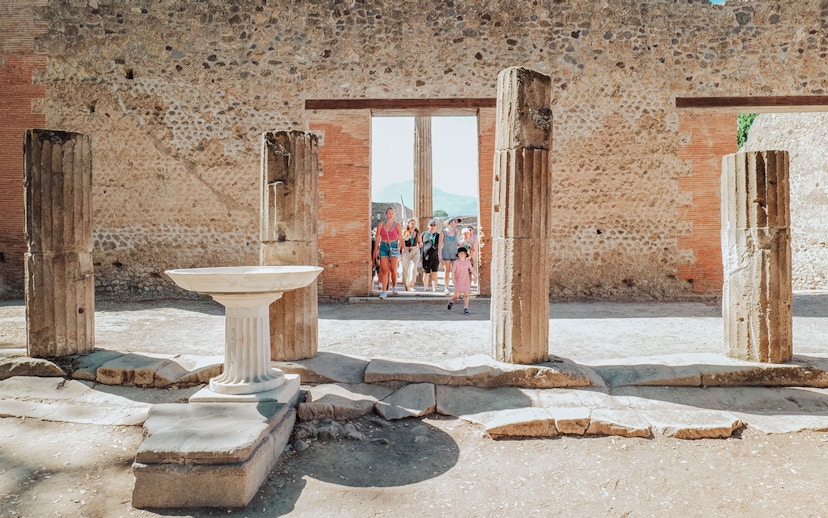
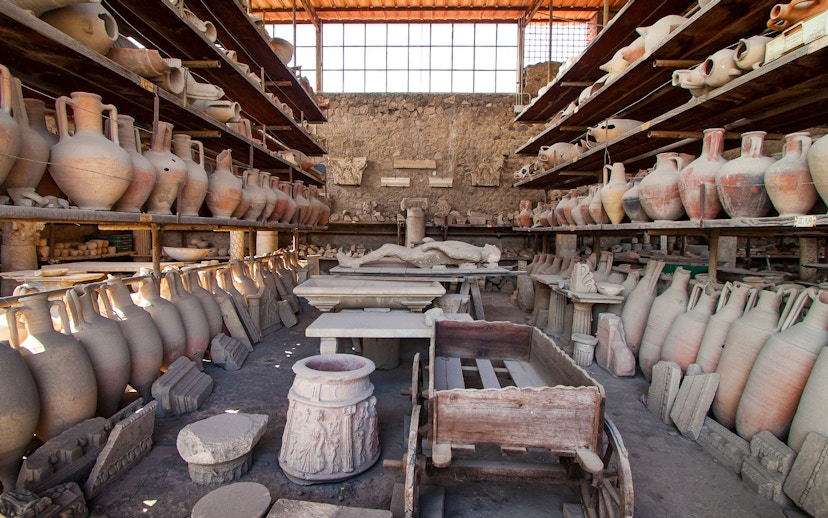
Spanning over 170 acres, Pompeii, isn’t something you can “see in an hour.” Exploring means wandering Roman streets, homes, temples, and theaters frozen in time since 79 AD. A bit of pre-planning helps you cover the highlights efficiently and avoid fatigue.

Navigating your way

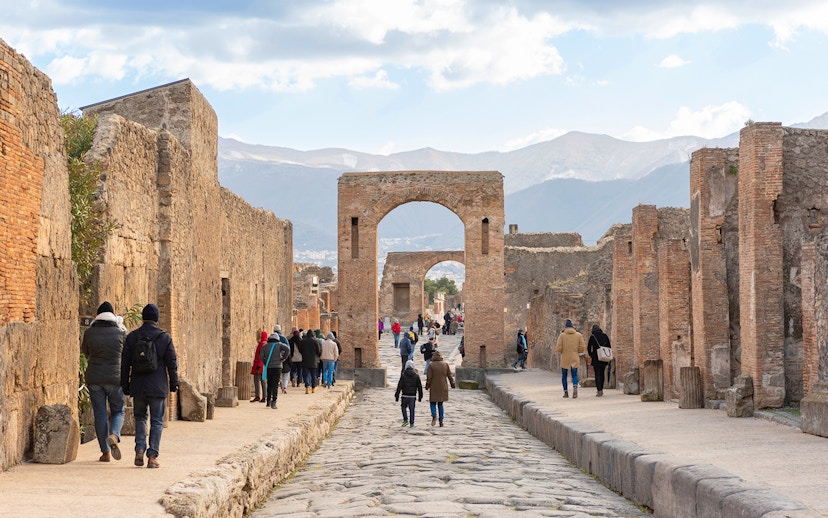
Pompeii unfolds like a full Roman city, complete with forums, theaters, bathhouses, and homes. Most paths are open-air and paved with uneven stones, so pacing yourself is key.

Entrances

  • Porta Marina: The main and busiest entrance, just a short walk from Pompeii Scavi train station; ideal for first-time visitors
  • Piazza Anfiteatro: Located on the east side near the amphitheater; good for starting with less crowded zones
  • Piazza Esedra: Adjacent to Porta Marina, often used for group and guided tours

Flow

Start from Porta Marina → explore the Forum → continue along the main streets toward the ancient baths and residential homes → see the plaster casts of victims → finish at the amphitheater.

Optional add-ons

Access nearby sites such as Villa of the Mysteries, Villa Regina (Boscoreale), and the Antiquarium with the Pompeii Plus ticket.

Tools

Download the official Pompeii map for live navigation — or use the on-site signage to orient yourself between key landmarks.

The smarter way to see Pompeii

Skip the lines, follow a seamless route, and cover all the must-see sites,, all in just 2 hours with an expert-led guided tour.

How to make the most of your time

Visit type Duration RouteWhat you get

Snapshot visit

2–3 hrs

Porta Marina → Forum → Stabian Baths → Lupanar → Amphitheater

See Pompeii’s most iconic ruins and get a sense of daily Roman life.

Deep dive

4–5 hrs

Porta Marina → Forum → House of the Faun → Amphitheater → Garden of the Fugitives → Villa of the Mysteries

Explore major highlights plus quieter corners and preserved frescoes.

Immersive experience

6+ hrs

Full circuit: Porta Marina → Forum → Temple of Apollo → Temple of Jupiter → Bathhouses → Bakeries → Residential homes → Amphitheater → Garden of the Fugitives → Necropolis

A comprehensive journey through ancient streets, homes, and public spaces—expect to walk 10,000+ steps.

Handy tips

  • Book tickets in advance: Lines at the main entrance can stretch 30–60 minutes, especially in summer. Skip-the-line tickets save time and guarantee entry.
  • Arrive early or late: The site is busiest from 10am to 2pm. Arriving at opening (9am) or after 3pm means fewer crowds and cooler temperatures.
  • Avoid scam guides outside the gates: Several visitors report being approached by people offering “special access” tours before entering. Stick to the official guides/concessions inside after you pass through security. 
  • Pack a small bag only: Large backpacks, luggage and umbrellas may be refused or require storage. Keep your bag light and within size restrictions (~30×30×15 cm) to avoid delays.
  • Don’t rely on shade, plan for heat:Most paths are exposed, stones reflect heat, and especially in summer or midday you’ll feel it. A brimmed hat, high-SPF sunscreen and hydration are essential.
  • Stick to marked paths and respect the ruins: Uneven terrain, sudden level changes, and fragile structures mean you must watch your step and avoid climbing walls or barriers.

Bring your own snacks & a refillable bottle: Cafés are few and queues may form. There are drinking fountains, but you’ll feel better if you carry water and light snacks to keep your energy up.

Explore Pompeii

Step into the ancient city of Pompeii and trace life as it was before the eruption. Follow this journey through its most significant sites — each revealing a different side of Roman life.

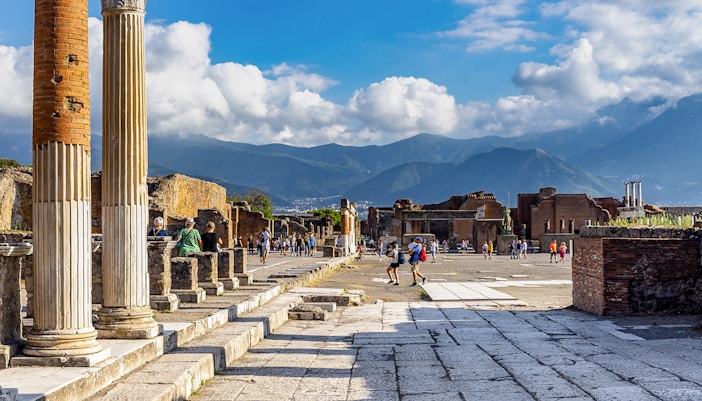
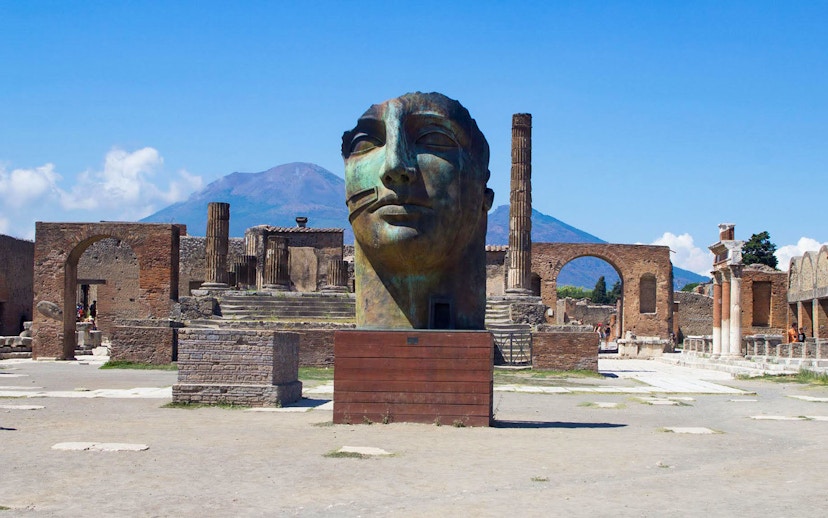
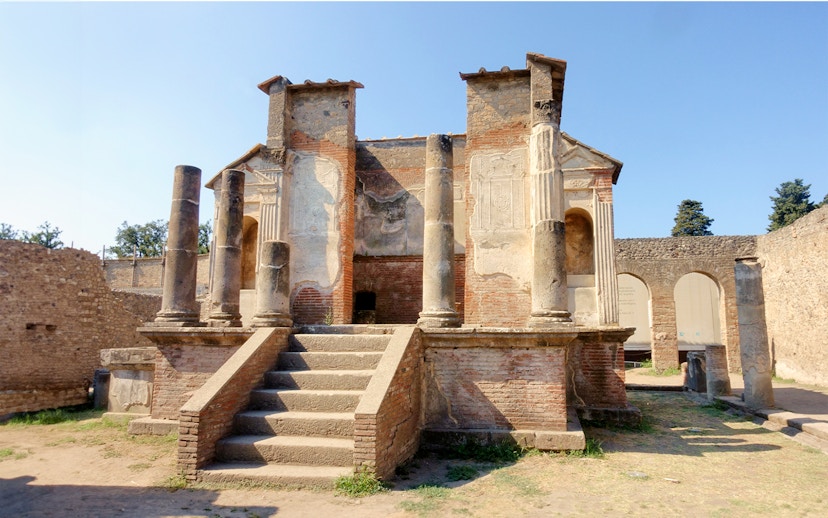
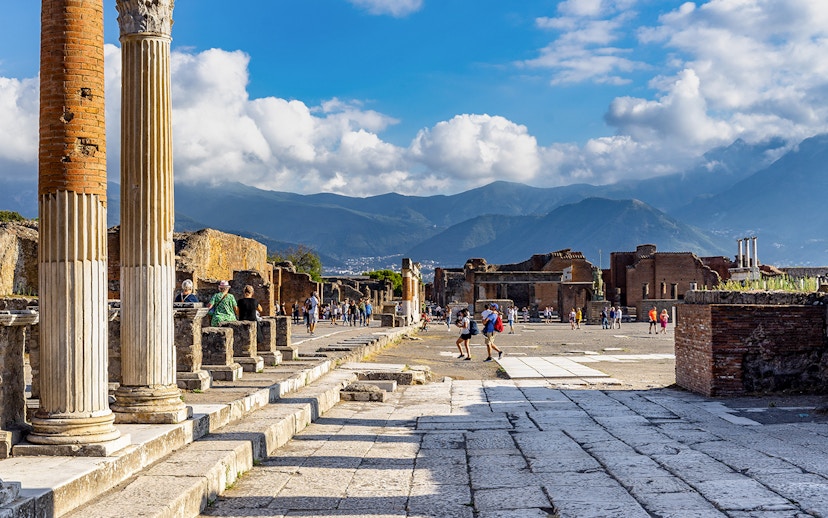
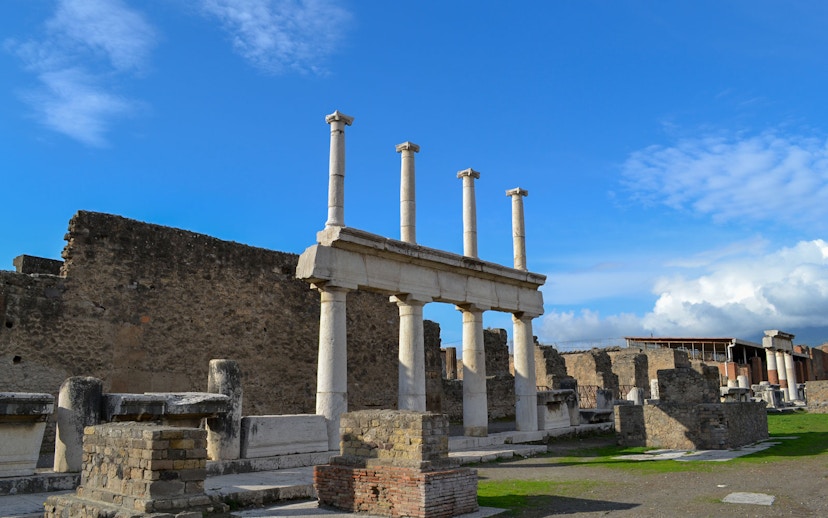
Forum

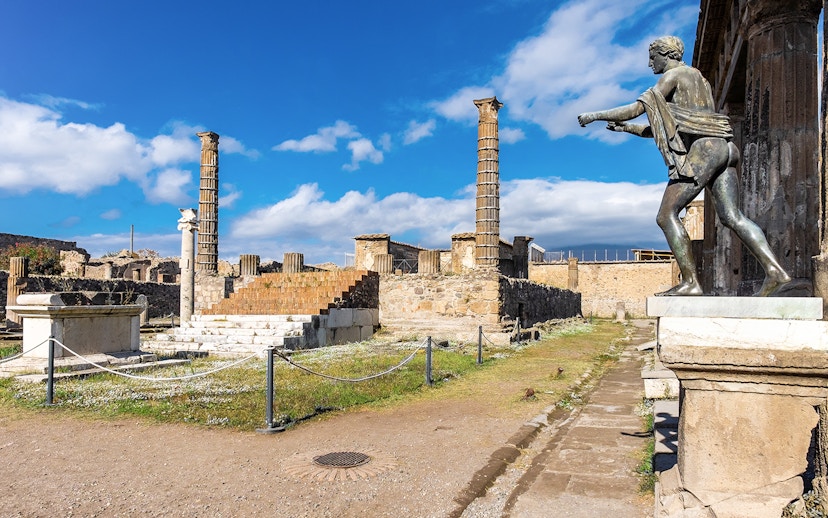
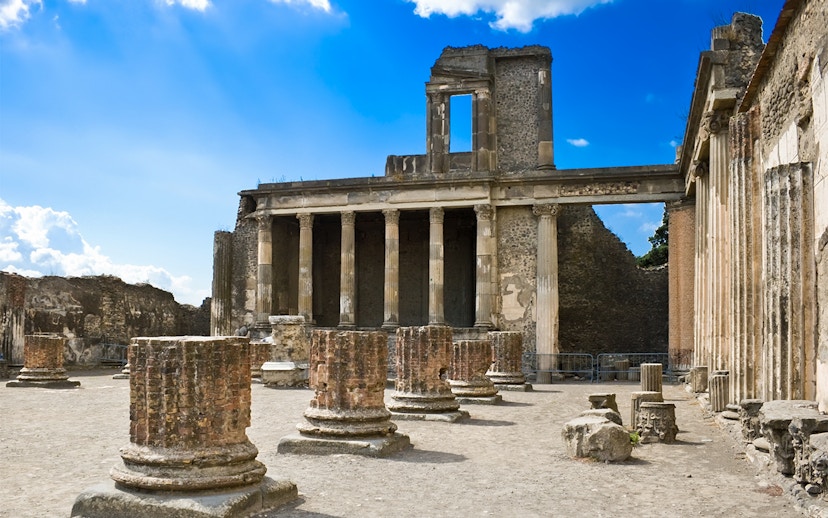
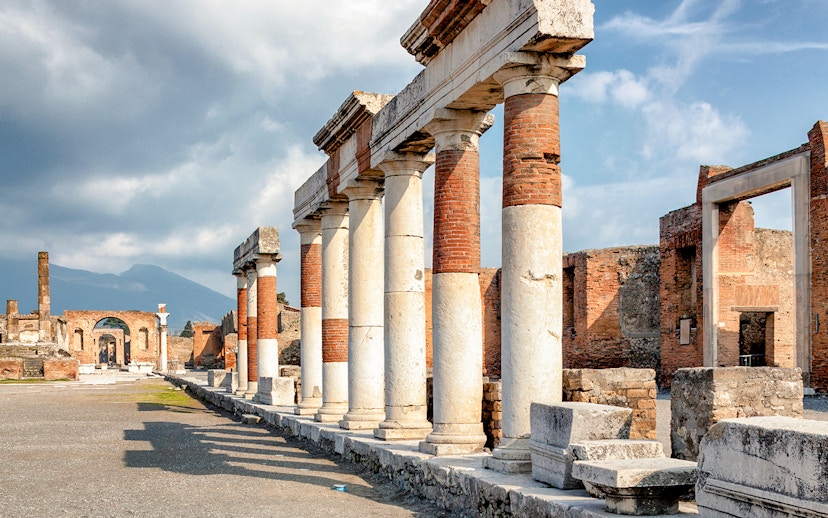
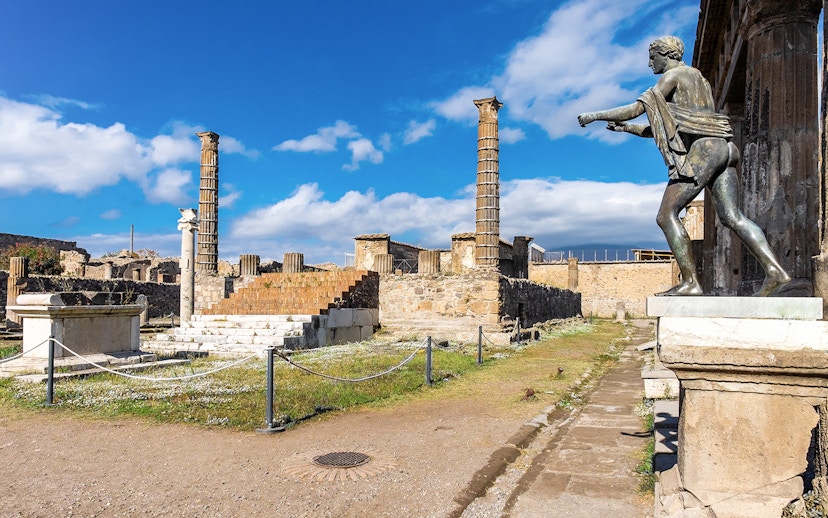
The political and social heart of Pompeii, surrounded by temples, markets, and government buildings.What to look out for: Temple of Apollo, Basilica

Uncover the heart of the city

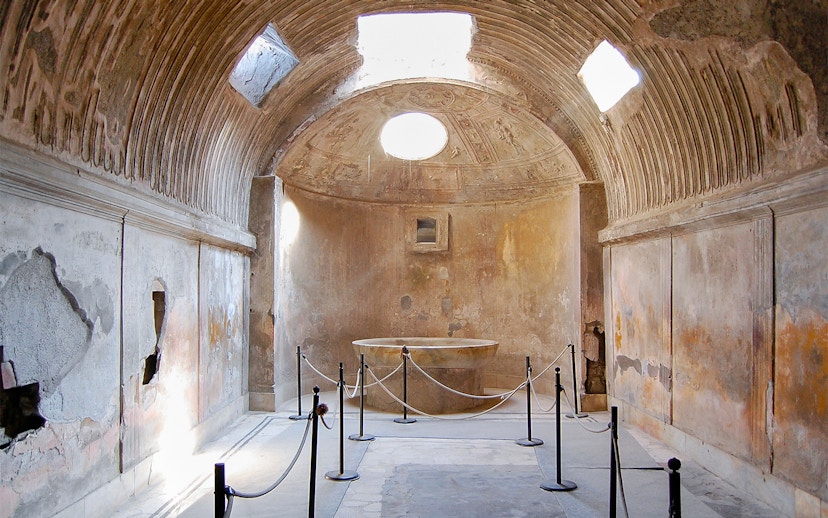
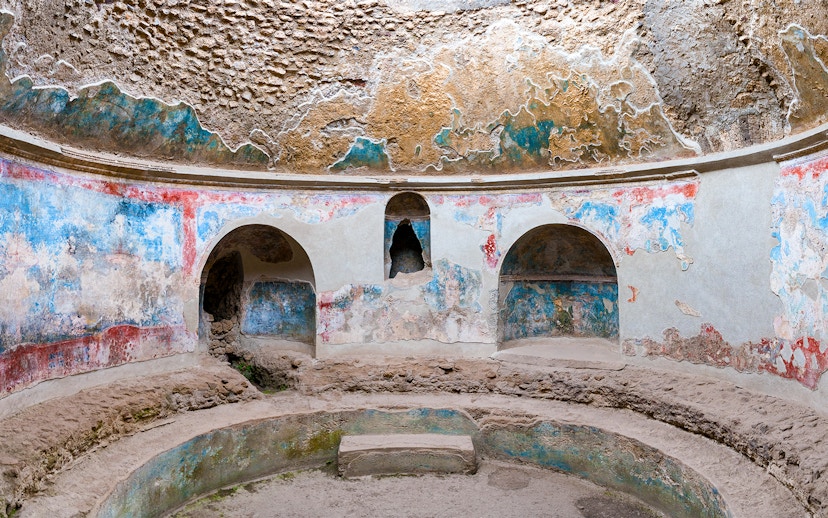
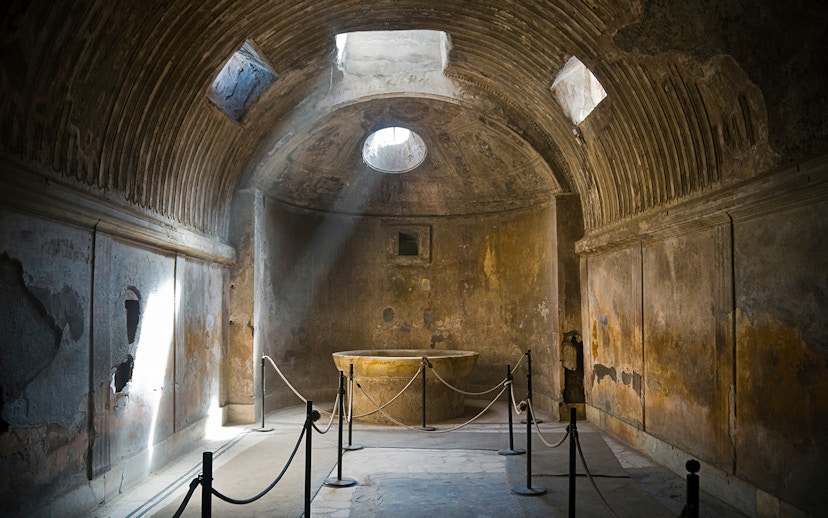
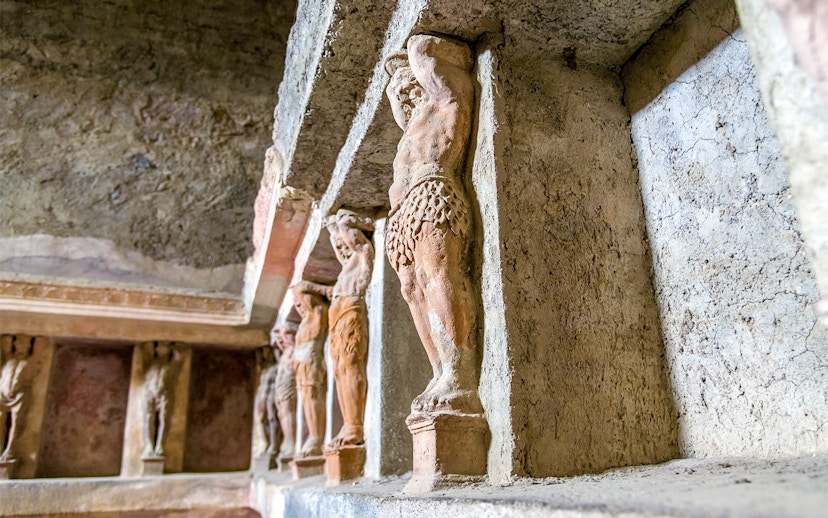
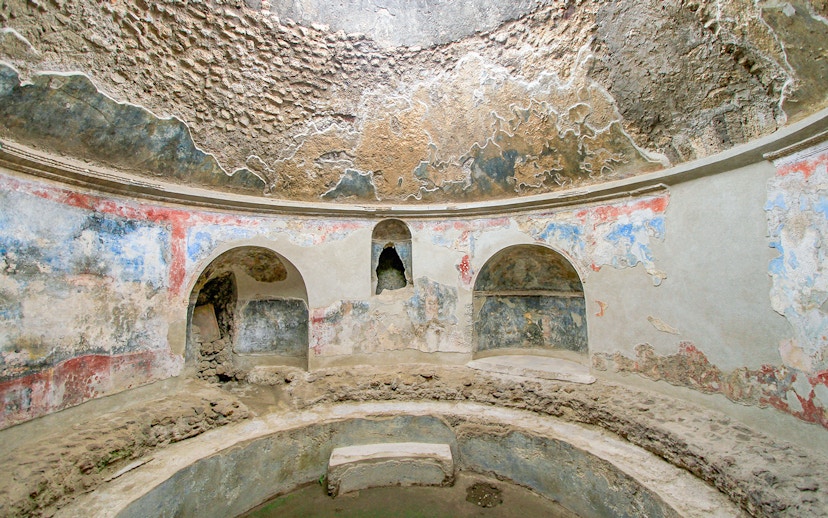
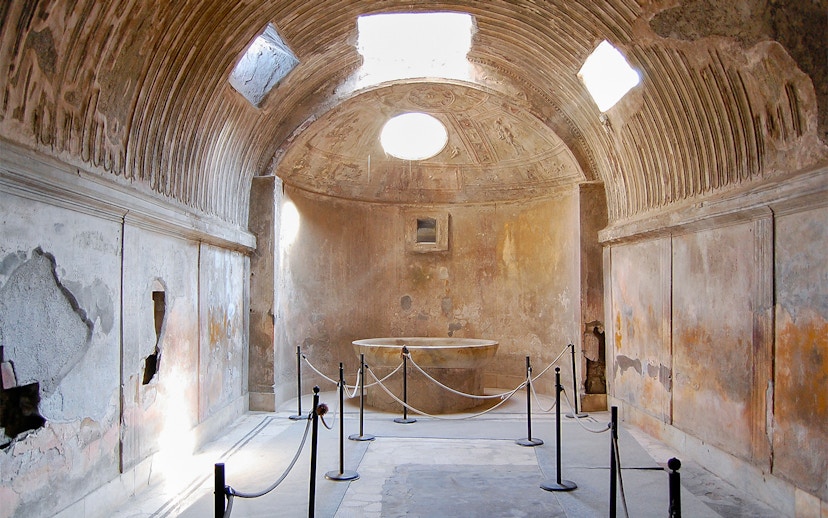
Stabian Baths

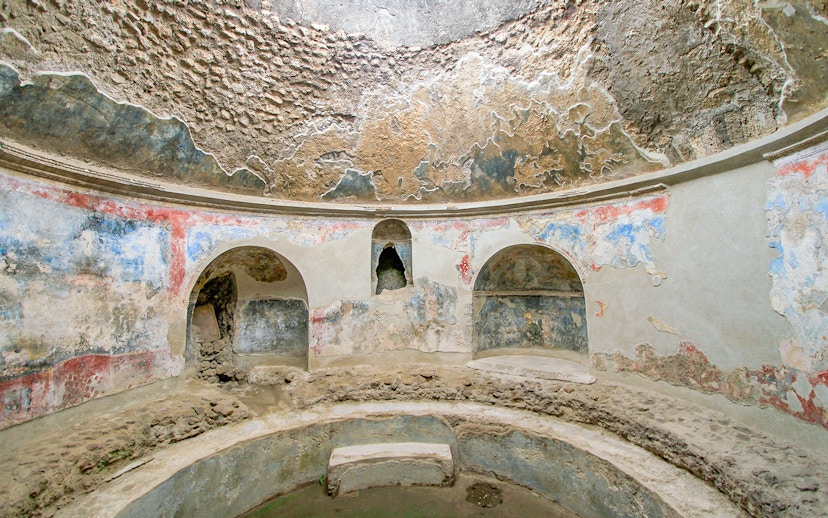
Among the oldest and best-preserved bath complexes, showing how Romans bathed, socialized, and relaxed.What to look out for: Frigidarium, caldarium, mosaics

Step inside ancient leisure →

House of the Faun

One of the grandest homes in Pompeii, filled with stunning mosaics and sculptures. What to look out for: Alexander Mosaic, Dancing Faun statue

Amphitheater

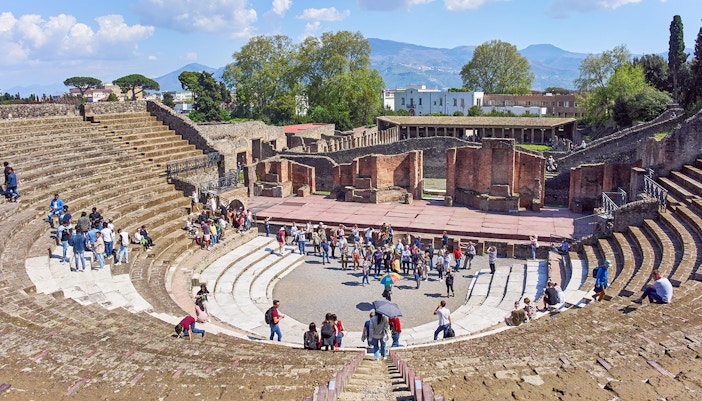
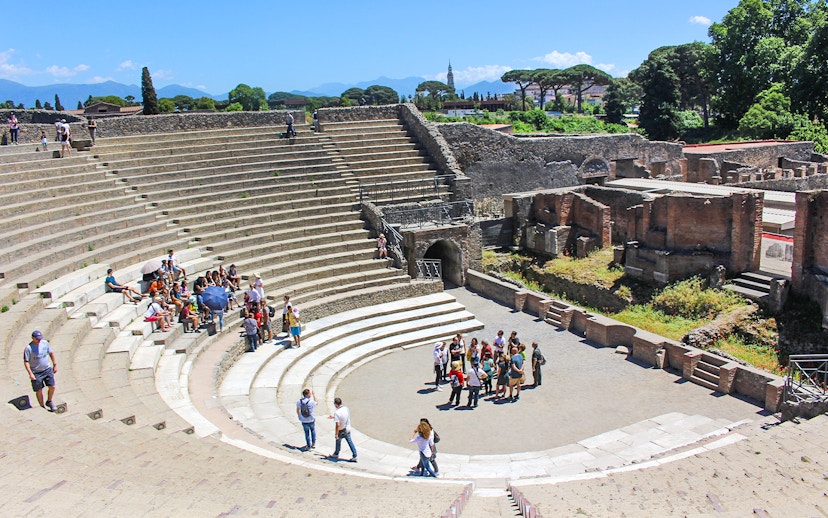
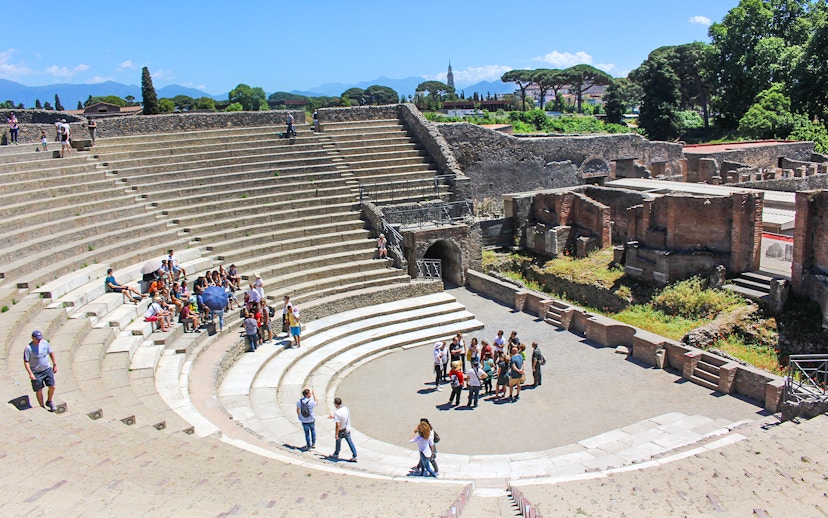
A remarkably intact structure that once thundered with cheers for gladiatorial games and public shows. What to look out for: Arena floor, seating tiers

Garden of the Fugitives

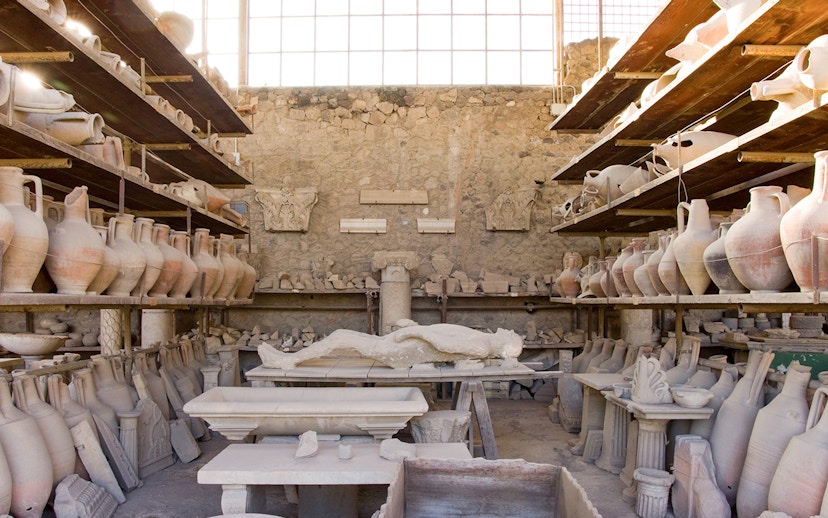
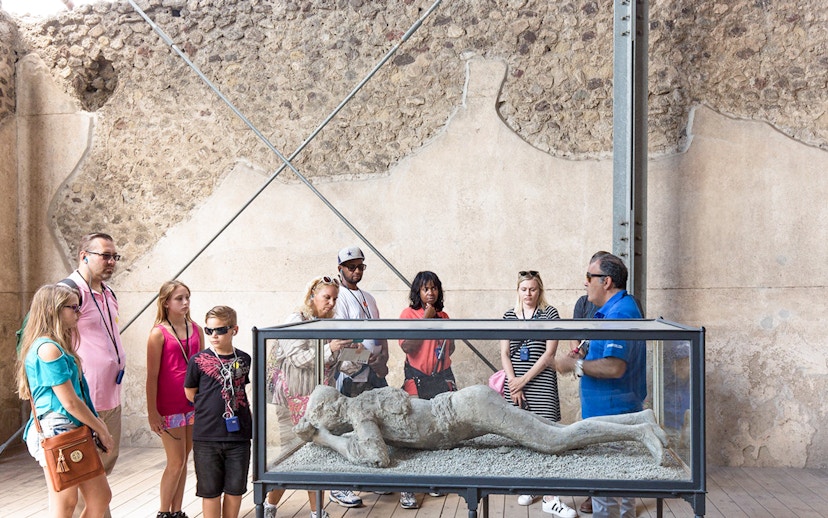
A solemn space preserving casts of victims in their final moments — a haunting testament to the eruption.What to look out for: Plaster casts, vineyard reconstructions

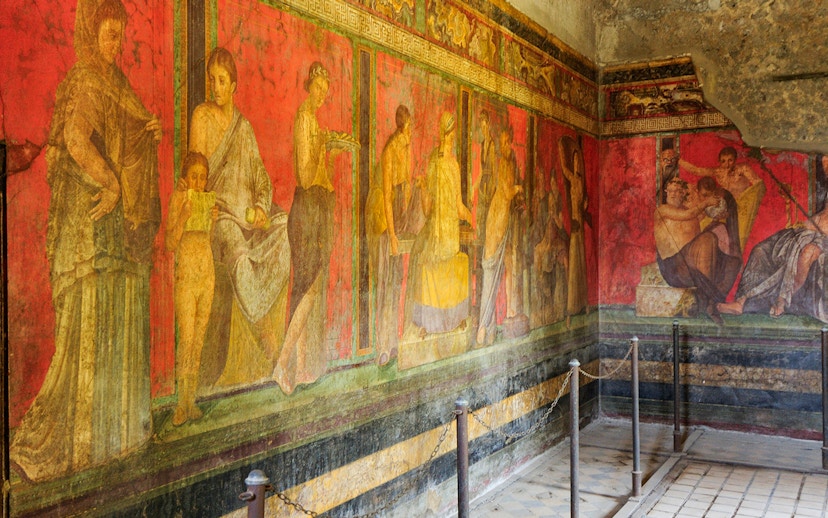
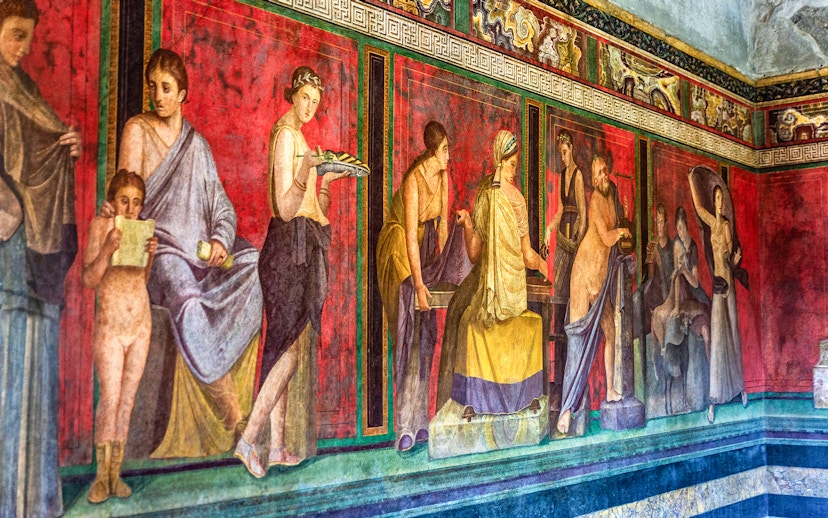
Villa of the Mysteries

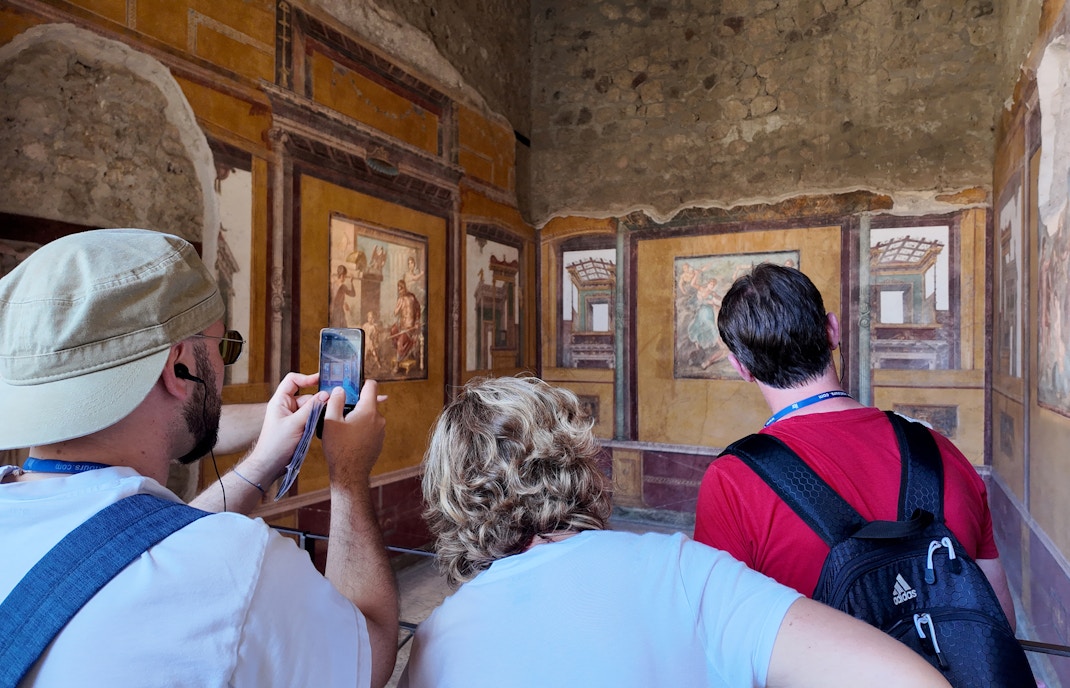
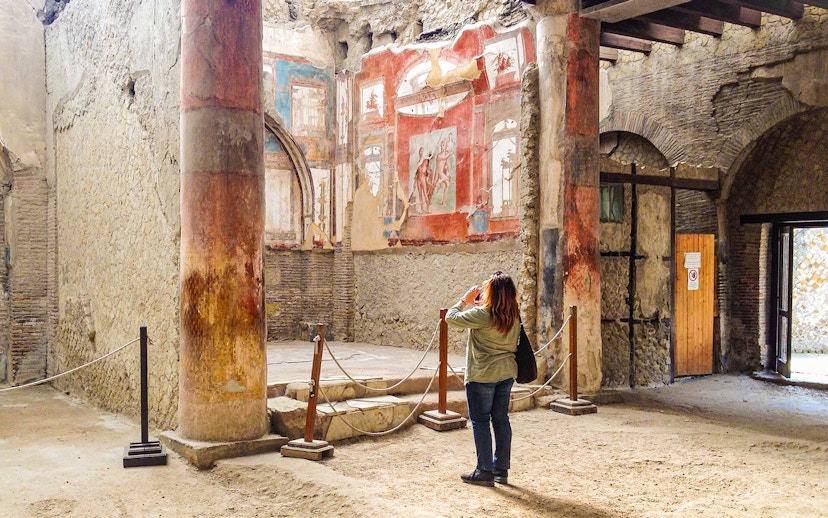
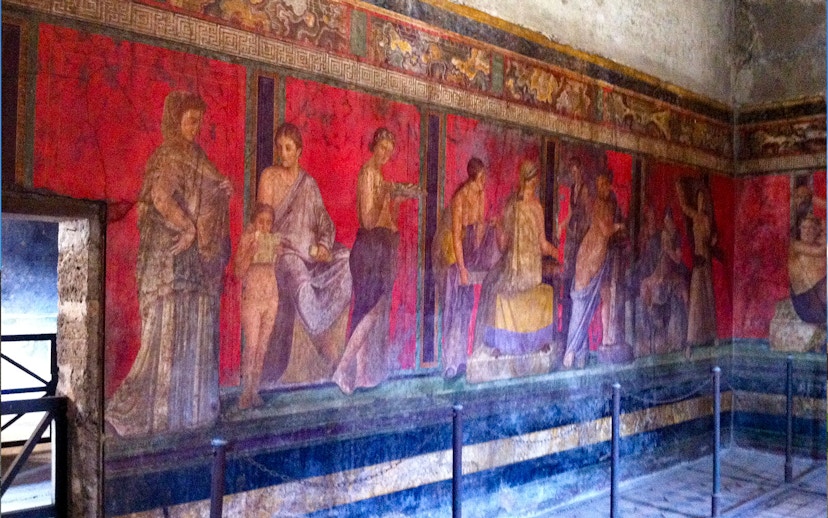
A grand villa beyond the city walls, famous for its vivid frescoes of mysterious Dionysian rituals.What to look out for: The fresco room

Street of Tombs

The ancient road leading out toward Herculaneum, lined with elaborate family mausoleums.What to look out for: Monumental tombs, inscriptions

Before you get there

👉 Entrances

Pick the right gate for your route and avoid long queues

👉 Timings

See best hours, closures, and late entry slots

👉 Location

Find the fastest train, bus, or driving routes

👉 Tips

See weather by month and prepare better

Know before booking your Pompeii tickets

Your ideal Pompeii ticket depends on time, crowd tolerance, and how deeply you want to explore.

  • Book early, especially in peak months: Pompeii welcomes over 15,000 visitors daily, and skip-the-line or guided tour slots can sell out weeks in advance, especially in high season.
  • Skip-the-line means skipping the ticket queue: You’ll still go through security at the main gate, but these tickets save 30–60 minutes on busy mornings.
  • Choose between standard entry or combo passes: The basic ticket grants access to the Pompeii Archaeological Park, while the Pompeii Plus upgrade adds entry to nearby villas (like Villa of the Mysteries and Villa Regina) and includes a shuttle between sites.
  • Pick your exploration style: You can go self-guided with an audio guide to explore the site at your pace with insightful commentary, or opt for a guided tour to get expert context from an archaeologist or licensed guide.
  • Combo tickets save time and money: Bundles like Pompeii + Vesuvius or Pompeii + Herculaneum offer discounted access to both sites, though transfers are usually not included unless specified.
  • Day trips include hassle-free transfers: If traveling from Naples, Sorrento, or Rome, opt for day trip tickets with round-trip transport, lunch, and pre-arranged site entries, it’s far smoother than arranging trains yourself.
  • Accessibility and terrain: Pompeii’s ancient streets are uneven, with limited wheelchair access in some zones. Comfortable shoes and sun protection are essential.

Pompeii ticket types explained

Ticket type What’s included Best for Price range

Pompeii entry tickets

Skip-the-line entry + Access to select villas & Antiquarium (optional) + Optional audio guide & guidebook

Independent visitors exploring at their own pace

€24–32

Pompeii guided tour

Fast-track entry + Guided tour (2 hrs) + Expert multilingual or archaeologist guide + Headsets

Visitors who want expert insights and structure

€31–73

Combo: Pompeii + Herculaneum

Fast-track entry to Pompeii & Herculaneum

Seeing the full arc of the tragedy

€55

From Naples: Pompeii, Herculaneum & Vesuvius day trip

Round-trip transfers from Naples + Fast-track Pompeii entry with audio guide & map + Entry to Herculaneum & Vesuvius

All-in-one day trippers from Naples

€135

From Naples: Pompeii tickets with transfers

Round-trip train transfers from Naples + Fast-track Pompeii entry + Audio guide

A no-fuss route from Naples to the ruins

€40–€55

Pompeii & Villa of Mysteries Small group tour

3-hr small-group tour + English-speaking archaeologist guide + Entry to Villa dei Misteri

A deeper, intimate guided experience

€42–€47

From Rome: Pompeii & Vesuvius day trip

Full-day coach trip + Hotel pickup + Pompeii guided tour + Vesuvius entry + Wi-Fi onboard + Lunch

Rome-based visitors wanting a comfortable, curated experience

€105–€154

From Sorrento: Pompeii Guided tour (+Vesuvius Option)

Round-trip transfers + Skip-the-line Pompeii entry + Local guide + Headsets + Optional Vesuvius entry

Sorrento travelers looking for a flexible guided outing

€49–€115

Pompeii timings & best time to visit

AttractionDayTimings Last entry Closed on

Pompeii Archaeological Park

Daily

9am–7pm (Apr–Oct), 9am–5pm (Nov–Mar)

1.5 hrs before closing

Jan 1, May 1, Dec 25

Note: Opening hours may shift seasonally; check the detailed schedule before your visit.

Best time to visit

Weekday vs weekend

Weekdays, especially Tuesday to Thursday, are quieter than weekends. Arrive at opening (9am) or after 3pm for the calmest experience. Saturdays and Sundays see the largest crowds, especially in spring and summer.

Peak season vs Low season

April to October is peak season, with long lines and hot weather. November to March is quieter, with fewer visitors and cooler temperatures—ideal for exploring without the crowds. For the best balance, visit in spring or autumn on a weekday morning.

Where is Pompeii located?

Pompeii is located in the Campania region of southern Italy, about 25km southeast of Naples, near the base of Mount Vesuvius. The site is easily accessible by train, car, or guided tour.

Address: Piazza Esedra, 80045 Pompei NA, Italy [Find on Maps]Closest landmark: Pompei Scavi–Villa dei Misteri train station, 100m away [map link]

Getting there

  • By train: Take the Circumvesuviana line from Naples (or from Sorrento) and alight at the Pompei Scavi ­– Villa dei Misteri station. The entrance to the archaeological site is a short walk from the station.
  • By bus: SITA buses run from Naples to Pompeii and stop very close to the main entrance.
  • By taxi: Taxis are available from Naples (and also from Sorrento and Salerno) but are considerably more expensive than public transport.

Drive via the A3 Napoli–Salerno motorway and exit at Pompei Ovest. Follow signs for the “Scavi Archeologici” (archaeological site). Paid parking is available near the entrances and tends to fill up during peak season.

Recommended parking areas:

  • Parcheggio Pompei Ruins – Via Plinio km 24 n. 95 (≈500 m walk, ~€15/day for cars)
  • Hub Parking Pompei – Via Plinio 161 (≈5 min walk, ~€8/day for cars with online booking)

Arrive early to secure a space and check access restrictions/ZTL in Pompei town centre.

Entrances

Entrance nameLocation Who is it for Crowds & wait times

Porta Marina

Near Pompei Scavi train station

General visitors, skip-the-line

Busiest; queues 30–60 min at peak

Piazza Anfiteatro

East side, near amphitheater

Groups, visitors from town

Quieter; shorter waits

Piazza Esedra

Adjacent to Porta Marina

Guided tours, some group entry

Moderate; used for tour meet-ups

Facilities

  • Audio guides: Available in multiple languages at the main entrances (Porta Marina, Piazza Esedra, and Piazza Anfiteatro). You’ll need to present an ID to rent one. Approximate rates: €9 for one device or €14 for two.
  • Cloakrooms: Free cloakroom service is available at all entrances. Bags or backpacks larger than 30 × 30 × 15 cm are not allowed inside and must be left here.
  • Restrooms: Toilets are located near all main entrances and key sites inside the ruins, including Piazza Anfiteatro, Porta Marina, and Casina dell’Aquila. 
  • Gift shops & bookshops: Found near the exits and at the Antiquarium, offering books, guides, replicas, and souvenirs.
  • Cafés & refreshment points: Light meals, drinks, and local snacks are available near the entrances and inside the site, including a self-service café at Casina dell’Aquila.
  • Drinking water: Free drinking fountains are located at several spots within the site.

First aid & other services: A first-aid station is located near the Chora Café on Vicolo degli Augustali. Smoking is prohibited inside the excavations, except in clearly marked smoking areas.

Accessibility

General facilities

  • Admission is free for visitors with disabilities and one accompanying person, upon presentation of valid ID or documentation.
  • Priority access is available at main entrances. The most accessible entrances are Piazza Anfiteatro and Porta Marina. 
  • Accessible restrooms are provided along the designated routes. 
  • Request or download the Pompeii for All map in advance to plan your route.

Mobility / physical disabilities

  • A dedicated accessible route called Pompeii for All covers around 3 to 3.5 kilometers through the park, featuring ramps and smoother surfaces suitable for wheelchairs.
  • Many ancient streets remain uneven, and several houses or areas involve steps or steep inclines.
  • Free folding wheelchairs are available for rent at the main entrances (Piazza Esedra and Piazza Anfiteatro); an ID is required. Advance booking is recommended.
  • Accessible parking and drop-off zones are available near the Piazza Anfiteatro entrance.

Hearing impairments

  • Audio guides are compatible with hearing aids and include adjustable volume.
  • Guided tours in Italian Sign Language (LIS) can be arranged upon request.

Visual impairments

  • Tactile maps, 3D models, and Braille information panels are available along certain parts of the accessible route.
  • The Pompeii for All path includes rest areas and viewing points with stable surfaces, but not all sections of the site are fully accessible due to its ancient layout.

Learning and cognitive disabilities

  • Easy-to-read guides and tailored tours for visitors with learning disabilities can be arranged in advance.
  • Staff on-site are trained to assist visitors with a range of accessibility needs.

Quick hacks

  • The most accessible entrances are Piazza Anfiteatro and Porta Marina.
  • Request or download the Pompeii for All map in advance to plan your route.
  • Arrive early and consider visiting during cooler hours, as many paths have limited shade.
  • If using a wheelchair or mobility aid, it’s best to have a companion due to uneven ground in some areas.

Visiting with family

  • Baby changing facilities are available near the restrooms at Via dell’Abbondanza; corner of Via Stabiana & Via della Fortuna; Via di Nola.
  • Strollers are permitted inside the site, but because many streets are uneven, cobbled and include steps or slopes, a lightweight stroller or a baby carrier for infants is often more manageable.
  • Family-friendly cafés and picnic zones are located near the main entrances and exterior areas, ideal for a break with children.
  • Children and young people under 18 years old enter free of charge, regardless of nationality, though a valid ID or proof of age should be brought.
  • Free-entry tickets for under-18s cannot always be booked online; in some cases they must be collected at the ticket office upon arrival.
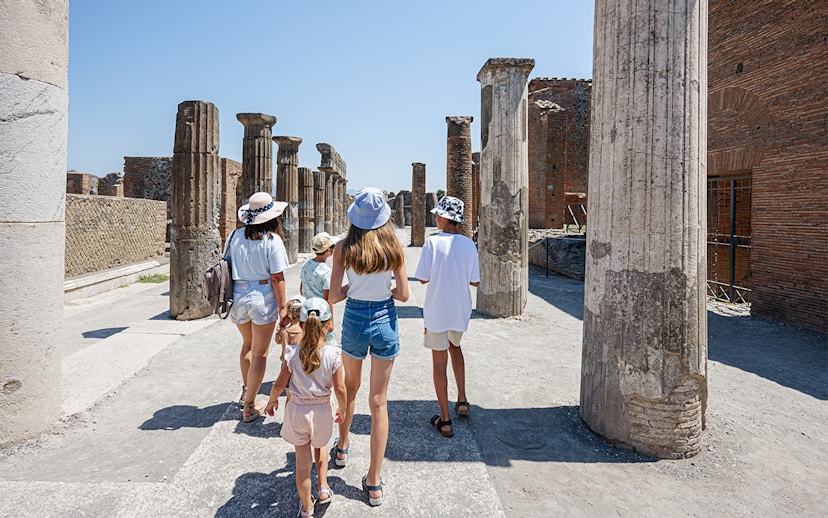
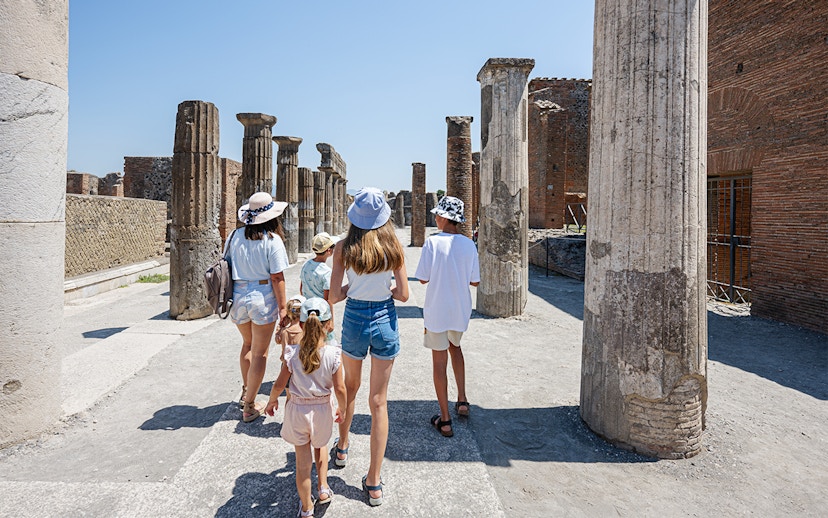
  • Because the site is extensive and involves walking over rough terrain, aim to plan for 2–4 hours when visiting with younger children. Relax the pace, plan break times, and identify shaded or rest areas in advance.
  • Be especially mindful of the terrain: any child-size wheels, pushchairs or quick-walker toddlers will face uneven surfaces. Closed shoes, sun protection and plenty of water are strongly recommended.

Rules and restrictions

  • Entry requires a valid, dated ticket. Visitors may be asked to show an identity document at entry.
  • All visitors must pass through a security screening before entering the site.
  • Bags larger than 30 × 30 × 15 cm are not allowed inside and must be checked at the cloakroom near the entrance.
  • Photography is permitted for personal use. Flash should be avoided near frescoes and artifacts. Drones and professional filming equipment are not permitted.
  • Eating and drinking are allowed only in designated refreshment areas within or near the entrances.
  • Smoking is strictly prohibited throughout the archaeological park.
  • Re-entry is not permitted with the same ticket once you exit the site.
  • Animals are not allowed, except certified service dogs accompanying visitors with disabilities (proper documentation required).
  • Visitors must remain on marked paths and avoid entering restricted or excavation areas.
  • Climbing on ancient structures, touching frescoes, or damaging ruins and artifacts is strictly forbidden.

Where to shop

Pompeii Bookshop (Porta Marina)

Books, guides, and replicas of ancient artifacts.

Gift kiosks (near exits)

Souvenirs, postcards, and local crafts.

Where to eat

Cafeteria (near Forum)

Sandwiches, salads, and drinks.

Snack bars (Porta Marina and Piazza Anfiteatro)

Quick bites and refreshments.

Nearby restaurants

Several trattorias and pizzerias are located just outside the main gates.

Where to stay

Pompeii is a convenient base for exploring the ruins and the Bay of Naples. The area around the site is safe and walkable, with a range of accommodation options.

Hotel Forum (2-min walk)

4★ hotel with garden and restaurant.
map

B&B Pompei Ruins (5-min walk)

Budget-friendly, family-run guesthouse.
map

Hotel del Sole (3-min walk)

3★ hotel with views of the ruins.
map

Airbnb Pompeii Loft (10-min walk)

Modern apartment, ideal for couples.
map

💡For nightlife and more dining options, consider staying in Naples or Sorrento, both a short train ride away.

Insider tips

  • Beat the crowds: Arrive at opening (9am) or after 3pm for a quieter experience.
  • Use the Piazza Anfiteatro entrance: It’s less crowded than Porta Marina, especially in high season.
  • Bring a refillable water bottle: There are fountains inside, but they may be turned off in winter.
  • Download the official Pompeii app: It offers maps, audio guides, and suggested routes.
  • Plan for weather: The site is exposed, so check the forecast and dress accordingly.
  • Don’t rush: Even a short visit covers a lot of ground—focus on a few highlights rather than trying to see everything.

Frequently Asked Questions About Visiting Pompeii

How long does it take to visit Pompeii?

Most visitors spend 2–4 hours, but you could easily spend a full day exploring the site.

Which entrance is best for Pompeii?

Porta Marina is the main entrance, but Piazza Anfiteatro is quieter and closer to the amphitheater.

Can I re-enter Pompeii with the same ticket?

No, re-entry is not permitted once you exit the site.

How do I get from Naples to Pompeii?

You can take the Circumvesuviana train from Naples Garibaldi station to Pompeii Scavi, Villa dei Misteri station, a taxi, or join a guided tour with transport included.

How long does it take to reach Pompeii from Naples?

By train, it takes about 30–40 minutes. By car or guided tour bus, expect around 30–45 minutes depending on traffic.

How long does it take to visit Pompeii from Rome?

The train journey takes about 2–2.5 hours to Naples, plus 30–40 minutes to Pompeii. A typical visit including travel can take 6–8 hours.

More Reads

About Pompeii

About

Pompeii skip the line tickets

Skip the Line

Pompeii opening hours

Opening Hours