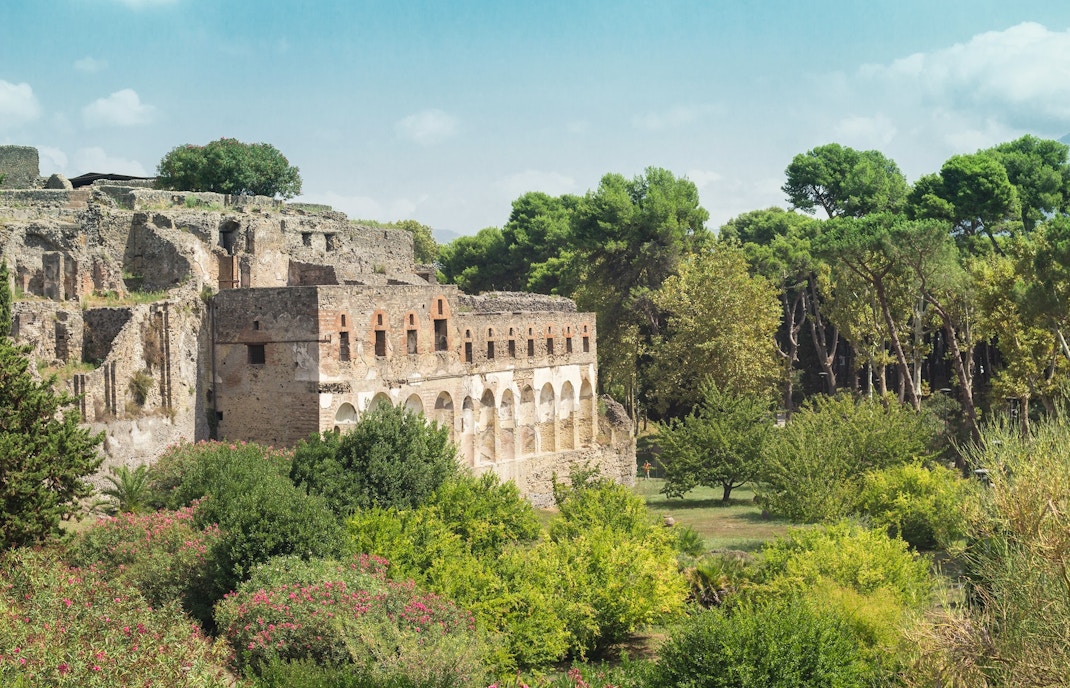
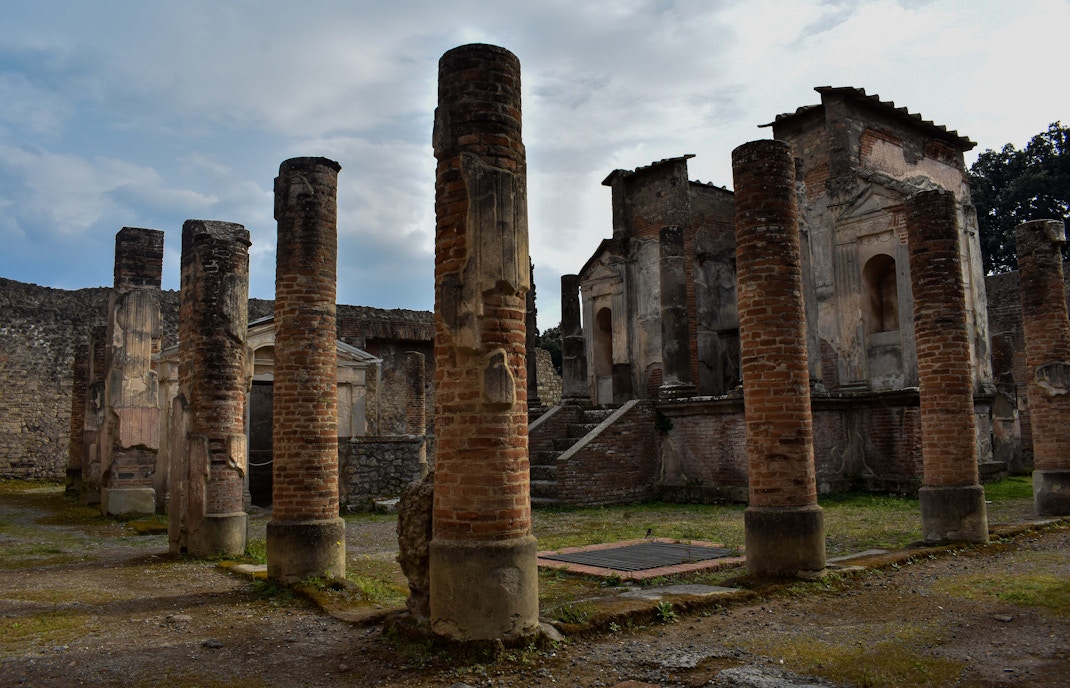
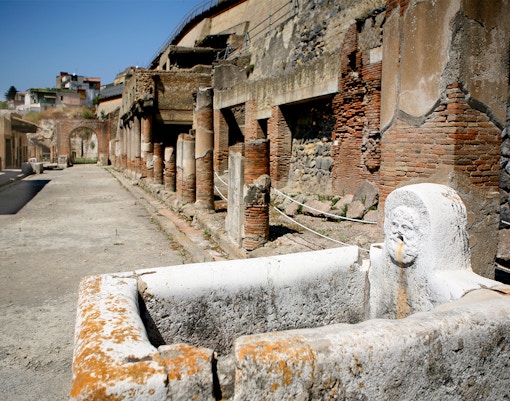
The Terme Centrali or Central Baths trace their origins back to the 1st century BC and were excavated in 1931. The bath was divided into areas for men and women, with changing rooms, wall niches to store clothing, and hot and cold rooms.
Things to Do & See at Herculaneum Ruins
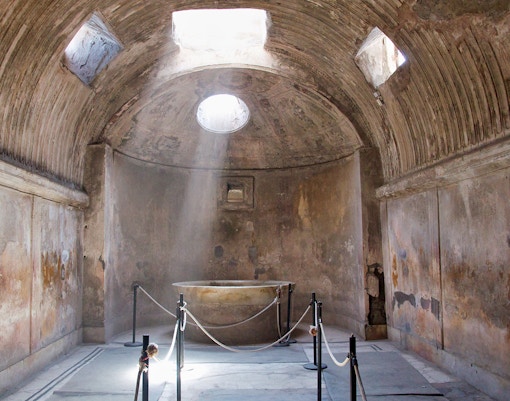
Men’s Baths (Thermae)
House of Neptune and Amphitrite
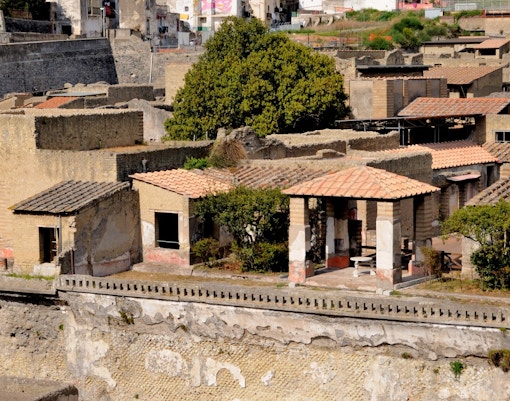
One of the most richly decorated in the village of Herculaneum with colorful mosaics and a courtyard, it is believed to have belonged to a rich family. One of the mosaics here depicts the god of the sea, Neptune, next to his wife Amphitrite, which lends the house its name.
Villa of the Papyri
This villa belonged to the father-in-law of the conqueror Julius Caesar, Lucius Calpurnius Piso Caesoninus. Its name comes from the 1785 papyrus rolls that were discovered in the library inside the villa. These rolls, preserved by the volcanic ash, contain Greek Philosophical texts that are still legible!
Fornici
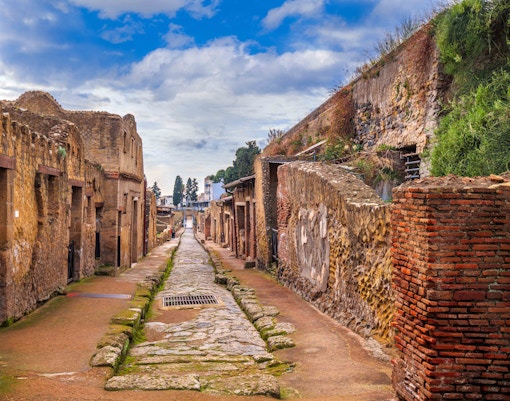
Fornici was the name of the port warehouse in the city. When the volcanic eruption threatened to kill the people of Herculaneum, many villagers tried to escape through the warehouses, but in vain. In 1980, around 300 human skeletons and artifacts were found here.
House of the Deer
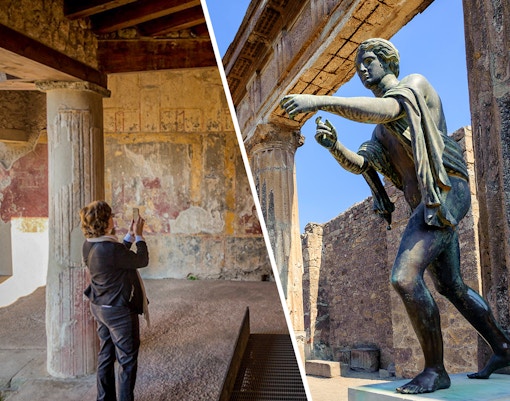
This is another luxurious house in the ancient village most likely owned by an old man with great regard for serenity, not pomp. The name is derived from the sculpture of the deer that stood in the home park. The house would have opened up to a beautiful view of the Gulf of Naples.
House of the Relief of Telephus
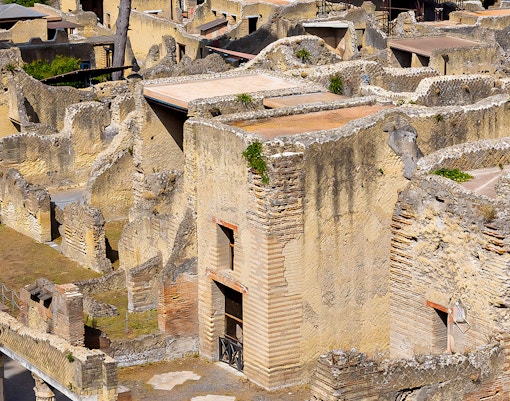
This 3 story home built between 27 BC and 14 AD was decorated with sculptures from the Neo-Attic school, including one of Relief of Telephus or Rilievo di Telefo. He was the son of the legendary founder of the city, as per Dionysius of Halicarnassus, Hercules.
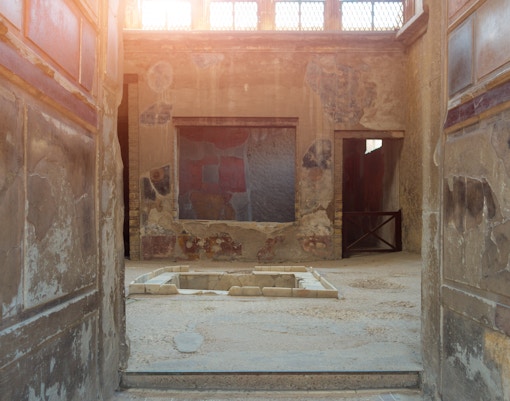
Samnite House
One of the oldest houses in Herculaneum, the Samnite House has a Greek-style atrium painted in the Fourth Style and even a rainwater pool! Amongst the objects found during the excavation, there is a mutilated statuette of Venus putting on her sandal and fragments of wooden table-legs carved in the form of a dog running.
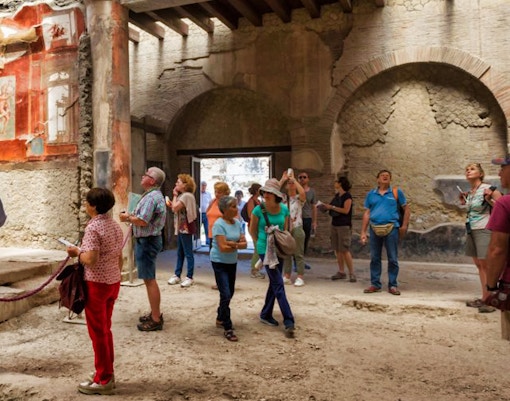
Hall of the Augustals
This square structure was the seat for the College of the Augustales, a cult of free men devoted to Emperor Augustus. There are magnificent frescos of Greek gods on both walls. The skeleton of the building’s custodian was discovered on his bed, probably waiting for his death from the eruption.