







Top things to do in Naples

Amalfi to Pompeii: the route at a glance

This is the classic inland history day from the Amalfi Coast: leave Amalfi’s harbor or bus stand in the morning and trade sea views for Pompeii’s streets, baths, forum, and villas. It’s doable, but from Amalfi this is not a quick hop — most DIY routes take ~1.5–3 hours each way and usually involve at least 1 change. The real choice is whether you want the faster seasonal ferry-and-train connection, the slower year-round bus fallback, or the flexibility of driving yourself.

  • Distance: ~35km; coastal road out of Amalfi, then inland rail or highway into the Vesuvian plain
  • Journey time: ~1 hr 30 min–2 hrs via ferry to Salerno + train; ~2 hr 15 min–3 hrs via bus + train; ~1 hr 15 min–2 hrs by car, traffic depending
  • The day: Leave Amalfi ~7:30–8:30am, reach Pompeii ~9:30–11am, return ~5–7pm — usually 4–6 hours on-site if connections behave
  • How it’s sold: DIY ferry + train, bus + train, self-drive, plus pre-booked Pompeii entry, audio guide, and guided tour formats once you arrive
  • Departure point: Amalfi Ferry Port or Piazza Flavio Gioia bus area, then either Pompei Scavi – Villa dei Misteri or Pompei station depending on route

Ways to make the trip

OptionThe journeyWhat you getPick it ifStarting from

⛴️ Ferry + train via Salerno

~1 hr 30 min–2 hrs total; smooth sea leg, then short regional train

Ferry, train, 1 change

You’re traveling in ferry season and want to avoid Amalfi Coast road traffic

~€26 round trip

🚌 Bus + train

~2 hr 15 min–3 hrs total; winding coastal road, then rail

SITA Sud bus, train, 1–2 changes

You need the year-round public-transport option and don’t mind a slower, more crowded run

~€10–€20 round trip

🚗 Self-drive

~1 hr 15 min–2 hrs; direct, but traffic and parking shape the day

Door-to-door flexibility, luggage space, paid parking near the site

You’re already renting a car and want full control over departure and return times

~€15–€30 before rental, depending on fuel, tolls, and parking

How the day runs

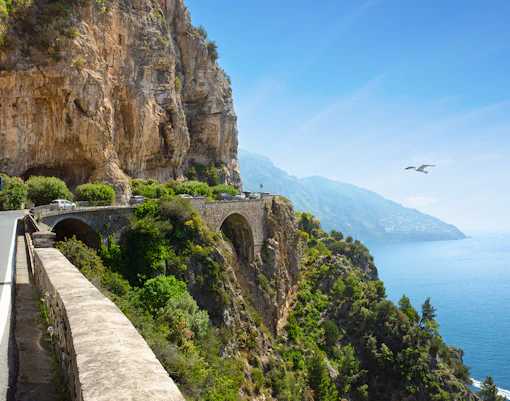
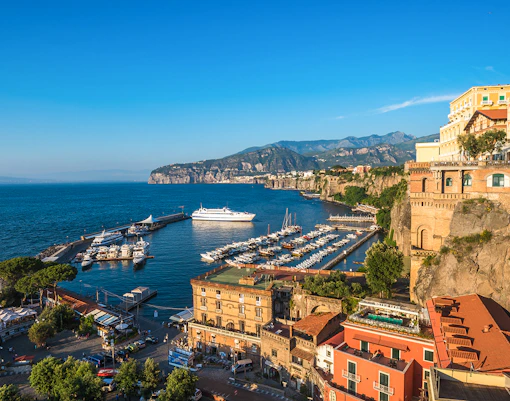
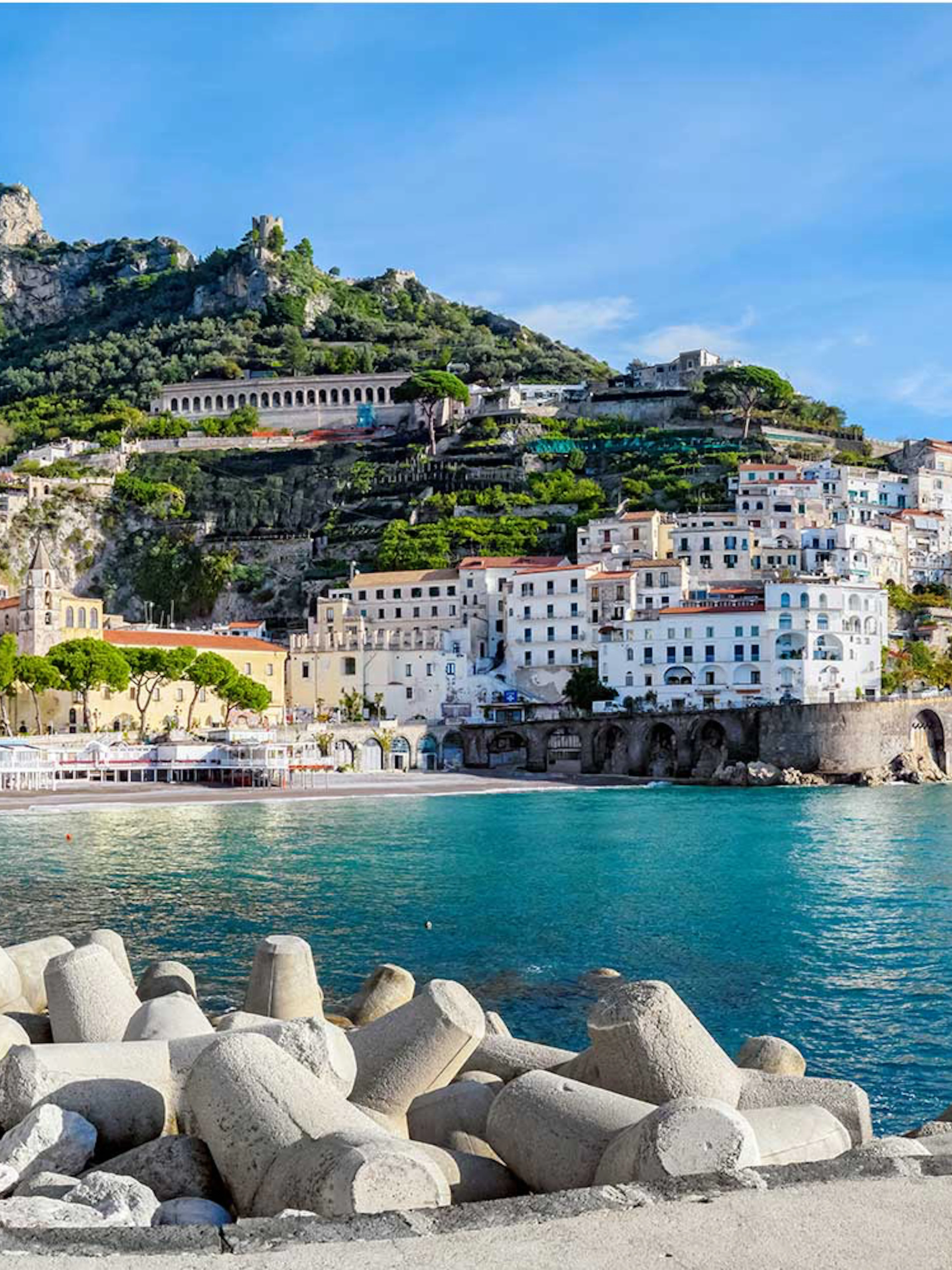
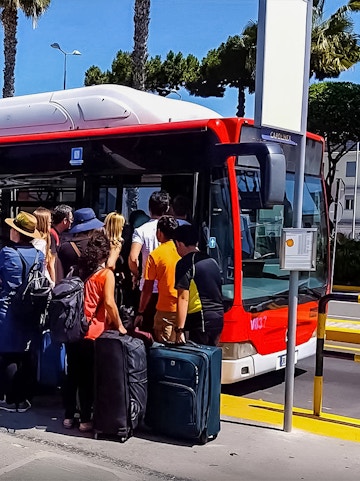
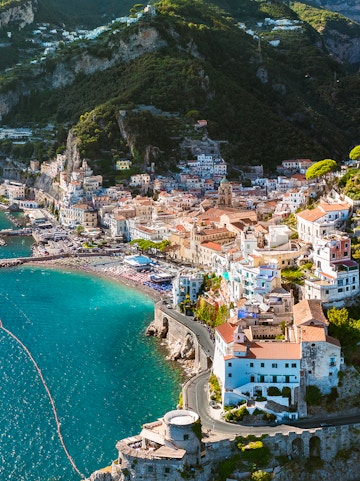
Amalfi departure point for Pompeii day trip
Coastal connection leg from Amalfi to Salerno or Sorrento
Train arrival into Pompeii from Amalfi connections
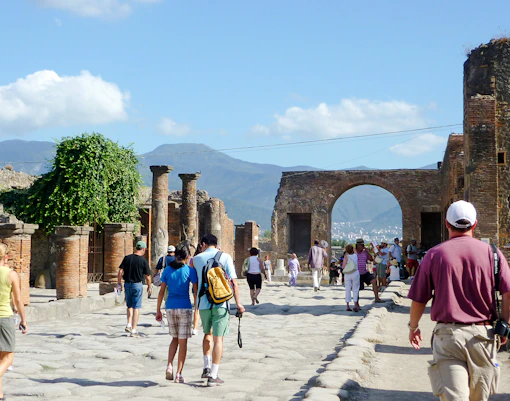
Pompeii entrance gate and station approach
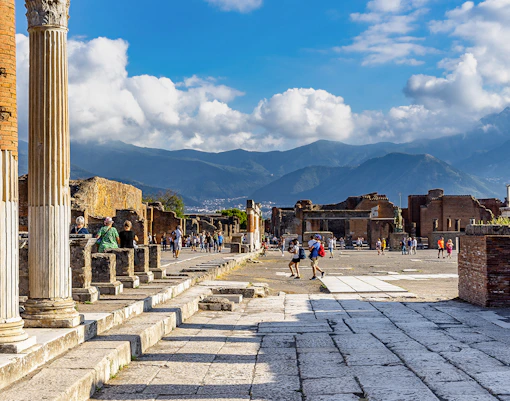
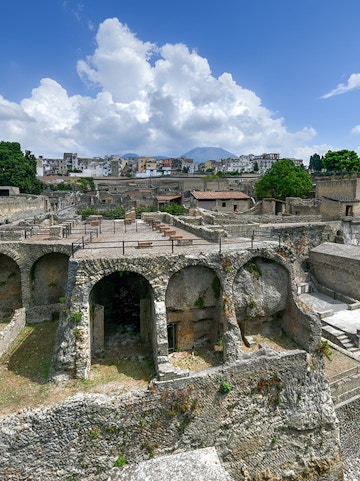
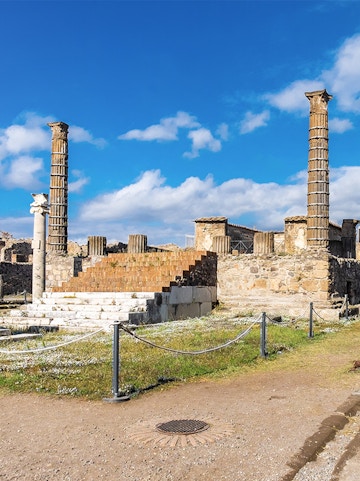
Pompeii ruins highlights during a day visit
Return journey from Pompeii to Amalfi
1/6

Amalfi departure

Start at Amalfi Ferry Port in season or the Piazza Flavio Gioia bus area year-round. A realistic departure window is ~7:30–8:30am if you want Pompeii before the late-morning heat and coach-group peak.

The coast-to-connection leg

Ferry to Salerno is the cleaner run when sailings are operating and seas are calm. The bus alternative works all year, but the SS163 coastal road is slow, bendy, and easily delayed in summer.

Rail into Pompeii

From Salerno, regional trains run inland toward Pompei station. From Sorrento, Campania Express or Circumvesuviana lands you at Pompei Scavi – Villa dei Misteri, which is the easiest arrival if you want Porta Marina.

At the gate

Budget ~15–30 minutes for the walk from Pompei station to Piazza Anfiteatro, or just a few minutes from Pompei Scavi to Porta Marina. Pre-booked entry matters here, especially from April to October.

Your Pompeii hours

Most visitors need at least 2–4 hours inside the archaeological park. If you want to see the Forum, baths, amphitheater, and a few houses without rushing, 3 hours is the safer minimum.

The return to Amalfi

Aim to leave Pompeii by ~4:30–5:30pm unless you’ve checked late rail and bus links carefully. The return is where missed connections hurt most, especially if you’re relying on the last practical bus back along the coast.

What the route delivers

The route gets you there; the reason you’re making it is what waits inland.

Amalfi coast departure ✅

A short distance on paper, but not a quick transfer in practice. Amalfi is the prettiest base of the 3, yet it gives you the most connection risk compared with Sorrento or Naples.

Salerno or Sorrento connection ✅

One interchange is the normal price of starting on the Amalfi Coast. Salerno usually makes the ferry-and-train option cleaner, while Sorrento works if you’re already leaning toward Campania Express.

Pompeii arrival ✅

The last mile matters. Pompei Scavi – Villa dei Misteri is best for Porta Marina Inferiore; Pompei station is better for Piazza Anfiteatro but adds a ~10–15-minute walk.

The Forum ✅

Pompeii’s civic heart, with Vesuvius framed beyond the columns and temple ruins. It’s the site’s classic first big reveal.

The amphitheater ✅

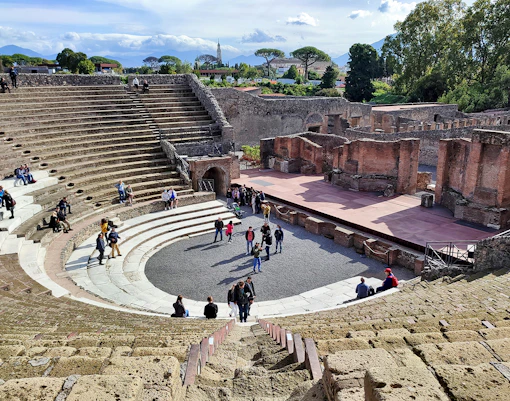
One of the oldest surviving Roman amphitheaters, and still one of Pompeii’s most atmospheric spaces if you make it to the far end of the park.

The baths, bakeries, and houses ✅

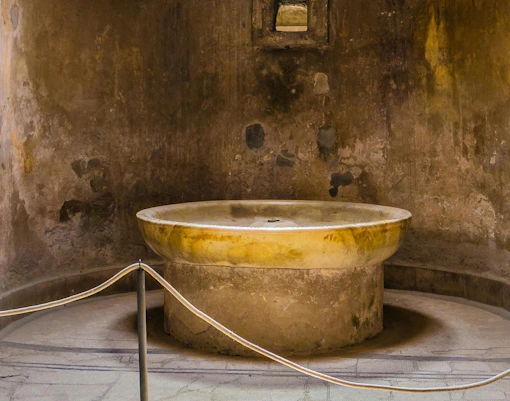
This is what makes Pompeii feel like a city, not a monument: bread ovens, shop counters, painted walls, and domestic rooms still laid out street by street.

The plaster casts ✅

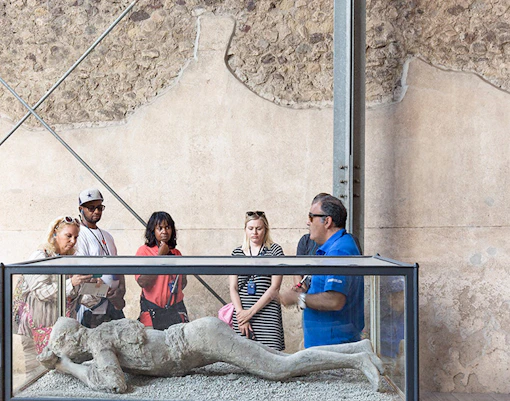
The most sobering stop on the route. They turn an archaeological visit into a human story fast.

From Amalfi, or from somewhere else?

Departure pointCrossing/haul timeBest for

🏖️ Amalfi *(this page)*

~1 hr 30 min–3 hrs each way

Staying on the coast and not changing base — but it’s the least flexible origin, with the most connection risk and the fewest easy return options

🍋 Sorrento

~30–40 min by Campania Express or Circumvesuviana

The easiest coastal base for Pompeii — shorter rail run, simpler station-to-gate logistics, and the strongest fit if ruins are a trip priority

🏙️ Naples

~35–40 min by train

The most practical overall origin — fastest access, most departures, and the easiest place to add Herculaneum or Vesuvius on the same day

Plan your trip

🕐 When to go and when to book

The best balance is usually spring and early fall, when Pompeii is still easy to visit without the worst summer heat. Ferry-based routes from Amalfi are strongest in the warmer months and can reduce your road time significantly, but they’re seasonal and weather-led. In July and August, book Pompeii entry before you leave the coast — you don’t want to spend your best morning hour in a ticket line after a 2-leg transfer.

📍 Getting there and check-in

From Amalfi, your 2 realistic public-transport starts are the ferry port and the SITA Sud bus area at Piazza Flavio Gioia. If you’re using Pompei Scavi – Villa dei Misteri, you’ll be nearest Porta Marina Inferiore; if you arrive at Pompei station, plan a ~10–15-minute walk to Piazza Anfiteatro. For any pre-booked entry or guided visit, aim to be at the gate at least 15–20 minutes early.

✅ What’s included (and what isn’t)

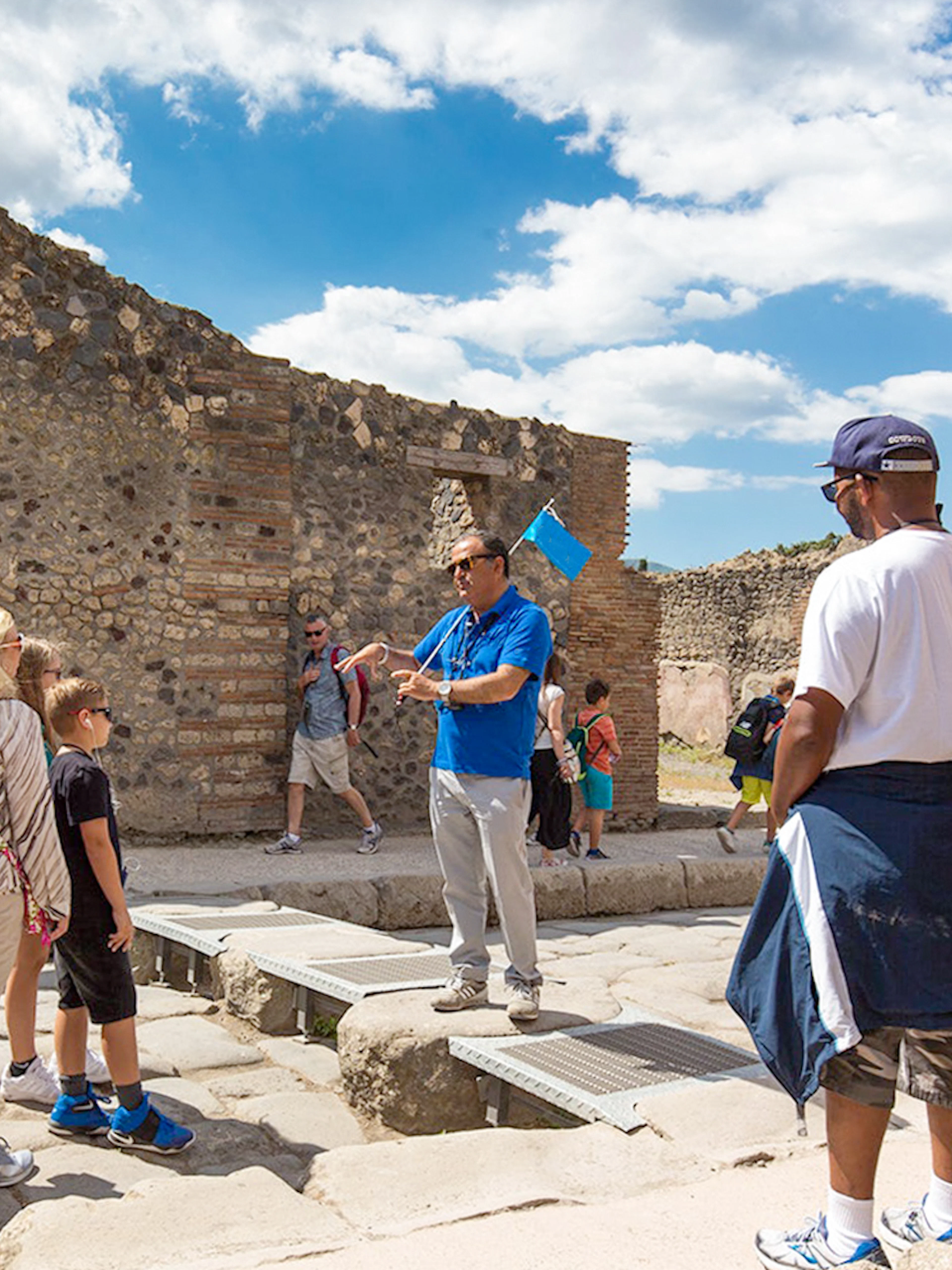
Transport from Amalfi is usually separate from site access. Once you reach Pompeii, Headout’s live inventory covers formats such as Pompeii Entry Tickets, Pompeii Entry Tickets with Audio Guide, Pompeii Skip-the-Line Guided Tour, and Pompeii Private Guided Tour with Archaeologist. Hotel transfers, meals, and your Amalfi connection are not standard inclusions on those site-entry products.

🎒 What to bring

Pack for 2 different environments: a breezy coast departure and an exposed archaeological site with very little shade. Bring water, sun protection, and shoes you’d trust on uneven Roman paving, not just on Amalfi’s seafront. If you’re taking the ferry, a light layer helps on deck; if you’re taking the bus, motion-sickness tablets are worth considering before the SS163 bends start.

👥 Choosing the right option

Ferry + train is the smartest DIY route when sailings are running and you want to dodge coastal traffic. Bus + train is the backup that works year-round, but it’s the most tiring in peak summer. If mobility is a concern, avoid stacking too many transfers: Naples is the easiest origin overall, and within Pompeii, the south-side entrances are more accessible than the main gate — confirm exact route needs before booking.

Visitor tips

  • Choose your rail station for your entrance, not just your ticket price — Pompei Scavi – Villa dei Misteri puts you right by Porta Marina Inferiore, which is the cleaner arrival if you’ve booked online. Pompei station works too, but it adds a town walk before you even start the ruins.

  • Take the ferry when the sea is calm and the timetable works — From Amalfi, the ferry-to-Salerno option usually saves more stress than the bus because it skips the worst coastal road traffic. In rough weather or shoulder season, though, don’t build your whole day around a sailing you haven’t checked twice.

  • Use Porta Marina Inferiore if you’ve booked ahead — Headout inventory notes that online ticket holders should use Piazza Porta Marina Inferiore for shorter lines. That matters more from Amalfi than from Naples, because every 20 minutes you lose at the gate costs you on the return too.

  • Start Pompeii with a route, not with wandering — From Amalfi, you’ve already spent real time getting here. Go straight for a spine route such as Forum → baths → house interiors → amphitheater, instead of burning 45 minutes deciding where to begin inside one of Italy’s biggest archaeological sites.

  • Store your larger bags before you enter — Pompeii has cloakroom and luggage storage at the Superiore Entrance, which is useful if you’re moving between coast bases. Don’t drag a suitcase over ancient stone unless you absolutely have to.

  • Keep Mount Vesuvius as an add-on only if you leave Amalfi early — Pompeii alone deserves 3 hours. If you want both in 1 day from the coast, pre-book and treat it as a long logistics day, not a relaxed one.

Keep building your Pompeii trip

🍋 Sorrento to Pompeii

the easiest coast-origin version, with a ~30–40-minute rail run and cleaner station-to-gate logistics

🏙️ Naples to Pompeii

the shortest mainstream route, with the strongest train frequency and the simplest same-day flexibility

🌋 Combo: Pompeii and Mount Vesuvius Entry Tickets with Audio Guide

add the volcano that buried the city, with Vesuvius park entry included

🏛️ Pompeii Entry Tickets

the destination hub for entry, audio guides, and guided formats once your Amalfi transfer is sorted

Frequently asked questions about Amalfi to Pompeii

No — not a dependable year-round public one. Most public-transport routes from Amalfi involve at least 1 change, usually through Salerno or Sorrento. That means the real DIY decision is not direct bus versus train, but which interchange gives you the least friction for the season you’re traveling in.